


Walking in Grandpa’s Footsteps
When Susie Means was a little girl, her grandpa, Carthel Means, encouraged her interest in his tractor. “When I was little he would let me cut hay with that big green tractor,” Susie said. “I was going really slowly. He told me to kick it up. Then he told me one day, I’m going to get you to where you can hook it and run it all by yourself. And he did,” she continued.
Like Santa in October
Agritourism is a growing industry in Arkansas supported by a detailed website for 345 locations throughout the state that includes livestock, wineries, horse camps, crops and farmers markets. With Halloween just around the corner, pumpkin patches and mazes are in full swing. McGarrah Farms Pumpkin Patch in Pea Ridge, Ark., contains both a pumpkin patch and a maze.

Cattle, Soil and Bees
Rick Stanislaus was raised in Watts, Okla., and followed a long route until he finally returned to the area and became the ag teacher at Watts High School.
The Code of the West
The code of the West is that a man’s word is as good as his bond. This is the philosophy behind Chimney Rock Cattle Company and the GENETRUST partnership.
Goat Knowledge from the Ground Up
Assessing goats should begin with the reason why you are choosing to breed and raise them. Mother, Debbie and daughter, Kellie Williams, of Chelsea, Okla., made a careful selection process when they decided to raise goats on their Misty Moon Farm. “You need to learn about your animals then you can see what and when something needs done. Some people want to buy a goat to keep their lawn mowed down. Goats are not grazers; they are browsers, like a deer. A good blackberry bramble or your favorite rose bush is a five-star meal to a goat,” said Debbie.
Offering Something other than Black
Ken and Charla Myers live southeast of Siloam Springs, Ark., where Ken is a full-time farmer and Charla an elementary education and ESL teacher in Fayetteville, Ark., with 29 years of experience behind her. The couple lives on 120 acres and farms another 80 acres of Ken’s grandmother’s estate. They run two cattle herds, a commercial herd of 33 Black Baldie and Charolais/Angus mommas and a 50 plus registered momma Hereford herd.
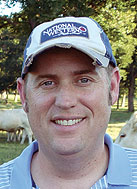
Breeding For Marketable Qualities
The quality and success of any cattle operation depends on the animal science knowledge of the owner as much as it depends on the marketing of their beef program. The sales or services can vary through production/consignment sales or through a private treaty.
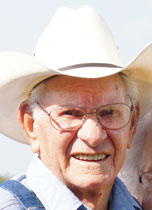
Gaining more than Weight
Running a commercial herd of a little over a 100 head of fullblood Limousin cattle is what keeps Richard Nelson, 88, of Chelsea, Okla., on one side of the road or the other. It also attributed to him being named the Fullblood Limousin Commercial Producer of the Year. His calf crop consists of both spring and fall breeding which are separated by a dirt road. “I keep my fall crop on one side of the road and my spring crop on the other. Depending on the season, I keep the breeding crop closer to me to keep a better eye on them,” said Richard.

A Good Eye for Cattle
Troy and Beverly Stout live south of West Fork, Ark., on 60 acres where they raise both Beefmaster and commercial cattle. Beverly said, “I bought 1 acre years before I married Troy because I love living in the country, but when we married we purchased additional land for grazing cattle.”
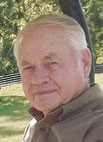
The Key for Improvements
Gene Longcrier’s father was ranch manager for the Colcord Ranch; a 2,000-acre cattle ranch owned by legendary lawman and oilman Charles F. Colcord. “I was born a few miles from here. I attended grade school at Minnehaha three or four miles out of Colcord. I finished high school at Kansas, Okla.,” Gene Longcrier said. “So I have been around here early on and we came back here when we retired after 30 years with Dow Chemical Company in the oil field division.” Gene and his wife, Zella, celebrated their 63rd wedding anniversary in August. They have three children, five grandkids and four great grandkids.