
Framing the Future, Rooted in Tradition
GRAVETTE, ARK. – Every agriculture journey starts somewhere. Some start with brand new farmers taking the first step, while others thrive from long-lasting legacies of hard work, stewardship and dedication.
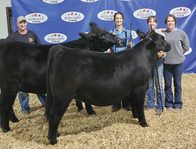
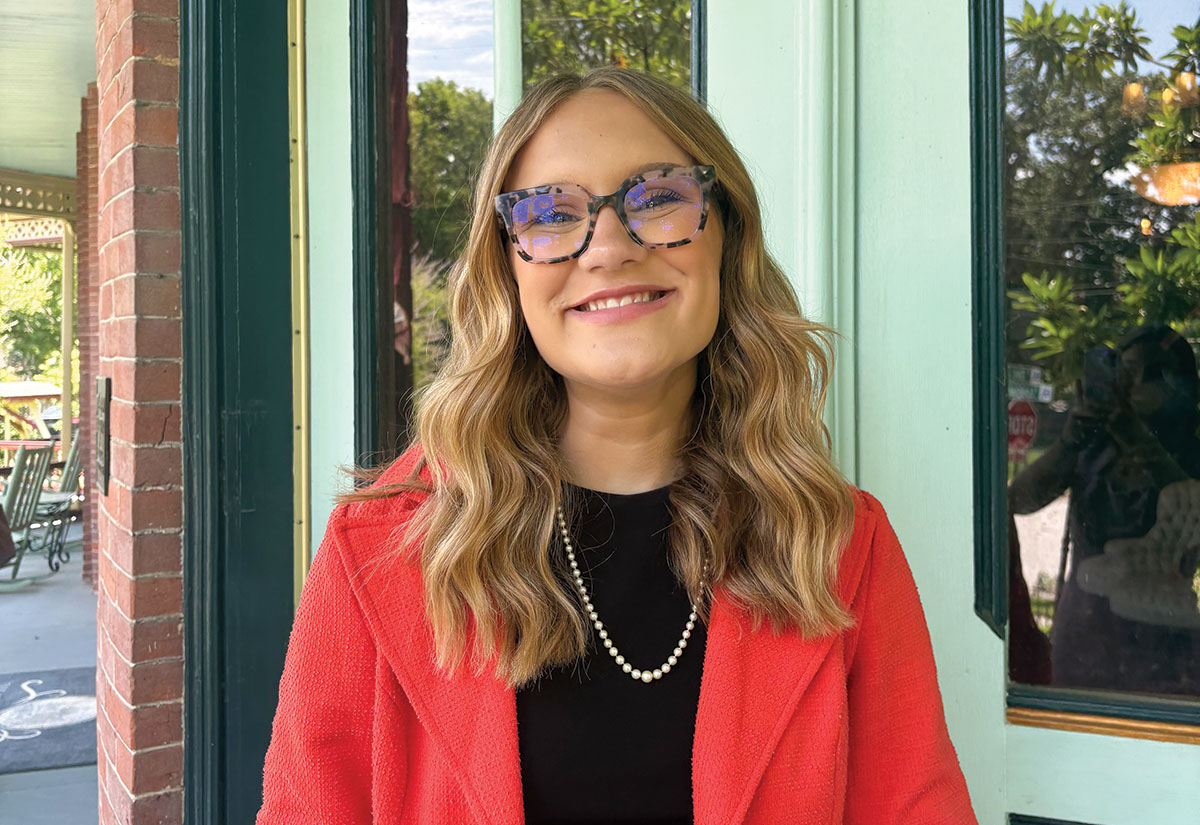
For Sulli Schaffer, the journey in agriculture began four generations ago. The foundations laid by her great-grandmother, who served as a 4-H leader and advisor, inspired her son’s involvement in conferences across the country and her grandchildren’s experiences raising and showing cattle. Today, at 18 years old, Schaffer boldly carries on her family’s tradition, not only honoring her roots in agriculture, but also blazing her own trail.
“Agriculture has kind of always been in my DNA,” she said.
Even at a young age, she worked cattle with her grandfather, who is a large animal veterinarian. Her time spent with him on the farm, as well as her family ties to agriculture, fueled her love for animals, and Schaffer began to pave her own way.
“I just grew up around it,” Schaffer recalled. “Once I got into 4-H, it became more of a passion of mine.”
For the 13 years, Schaffer dedicated her time to 4-H, a youth development program that emphasizes hands-on learning, especially in areas of leadership, healthy living, STEM and agriculture. She dabbled in almost everything 4-H has to offer, including leadership projects, fashion construction, sewing, food and nutrition and community service. However, she found herself especially interested in livestock.
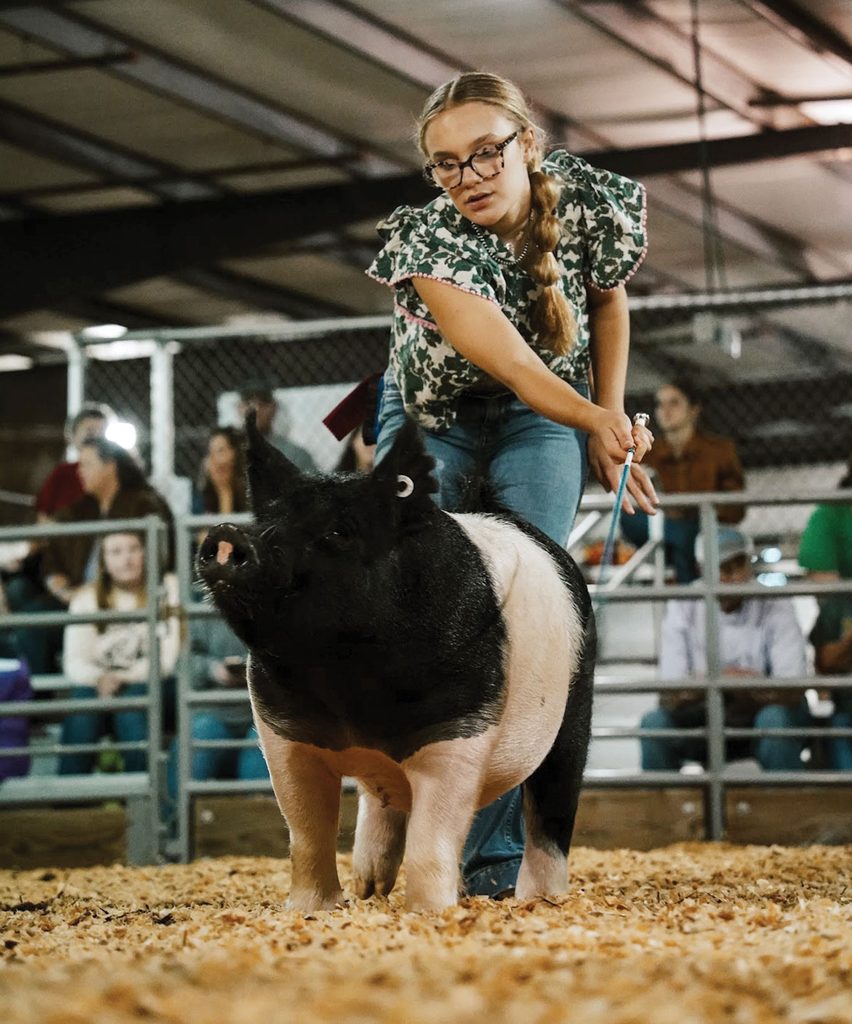
“I started with a dairy goat, and I still have the same goats. I eventually moved on to pigs, then ended up showing cattle, and now I have chickens and alpacas,” she said.
As her herd grew, so did her responsibilities. Schaffer and her brother Jasper started each day feeding, walking and washing their animals. While the labor was intensive, Schaffer said it taught her to recognize the importance of combining intention with effort.
“I learned how much putting in that time and hard work can pay off in the end,” she reflected. “It was honestly kind of hard to balance, but I also knew that 4-H was my first priority. It always has been.”
Despite the discipline it took to balance her agricultural responsibilities with school, Schaffer’s experience showing and caring for livestock ignited a passion that guided her steps towards her future.
“I always knew I wanted to work with animals in some capacity,” she said. “I just didn’t really know what I was going to do with that.”
The dots began to connect for Schaffer during a 4-H workshop with the Arkansas Game and Fish Commission. The workshop focused on careers in conservation, and Schaffer saw an opportunity which filled a community need while still fostering her passion for animals.
“Someone I know from high school is a game warden, and he started talking about how amazing being a vet or a biologist for the Game and Fish Commission could be,” she said. “I was like ‘Oh, that sounds really interesting’.”
While livestock shaped her early years, Schaffer began to explore options for a career that extended beyond the farm. She set her sights on pursuing a career as a wildlife biologist. However, the apple doesn’t fall far from the tree – Schaffer has a plan to pursue this dream in a way that still stays true to her agricultural roots.
“One of the things I’m hoping to do in my future is bridge that gap between environmental stewardship and ag. I feel like sometimes those two things become kind of disconnected,” she shared.
Schaffer plans to chase this dream at Oklahoma State University on their pre-vet track, and she credits 4-H for making this possible.
“Being involved in 4-H and in ag just really pushed my love for animals to an extent where I’m planning on going to college for it,” she said. “It definitely got me to the steps where I’ll hopefully become successful in bridging that gap I think is so needed in our community.”
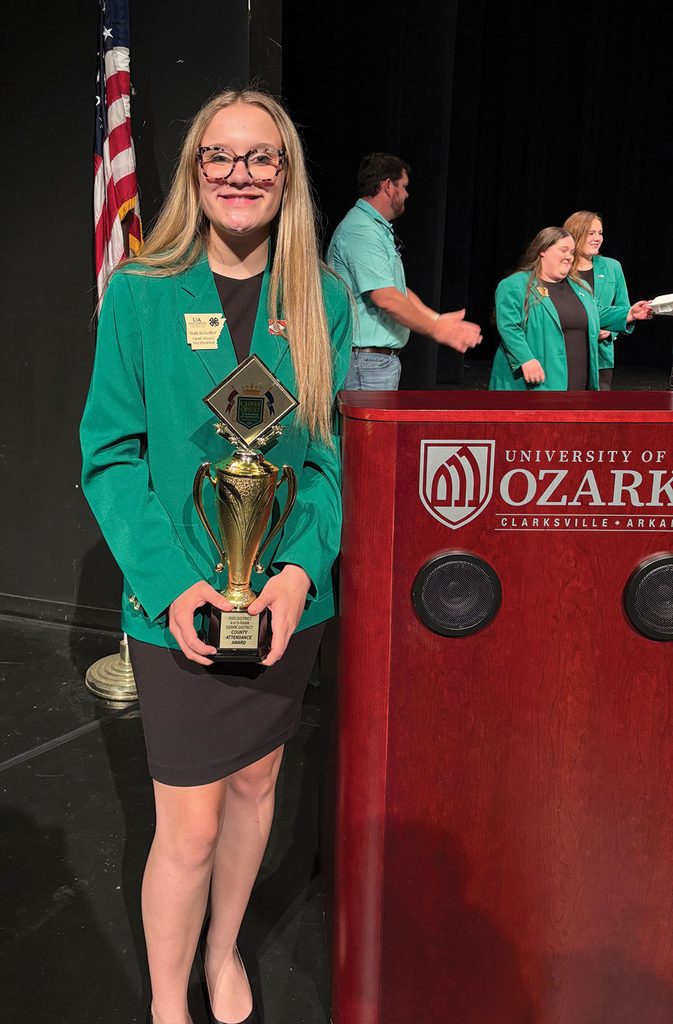
Schaffer has definitely put in the work to set herself up for success. In addition to the scholarships she earned through 4-H that made attending an out-of-state university a reality, she also served as an Arkansas State Officer for the 2025-2026 term. She ultimately concluded her time in 4-H by being inducted into the Arkansas 4-H Hall of Fame in 2026.
“Whenever you go to the 4-H Center in Little Rock, there’s a wall with everybody that’s been inducted into the 4-H Hall of Fame. I had always thought that would be really cool to be on that,” she reminisced. “I applied and was picked by a panel. It was really cool to see since it was the one thing I wanted to do to exit 4-H.”
While she definitely excelled in the spotlight, Schaffer’s intention in the little things never went unnoticed. Jessica Street, a Benton County 4-H extension agent, had a front row seat to witness Schaffer’s dedication.
“Sulli has been a joy to watch grow. She has been an outstanding leader, and her high character and commitment makes her an excellent role model for our other members,” Street shared. “We can’t wait to see what she accomplishes in the future!”
Mentoring, leading and encouraging others is central in Schaffer’s approach towards agriculture. Despite her family’s long history in agriculture, Schaffer said the industry’s sense of community is what she values most.
“My favorite thing about being involved in agriculture is the family it has created,” she explained. “The family environment of ag is something that is so unique to it.”
This unity within agriculture is essential to its success, especially as farmers and ranchers pass the torch to the next generation. The growing number of young people leaving the agriculture industry has raised concerns about what’s ahead for the industry. Scaffer recognizes that those concerns are hard to ignore.
“It can be kind of sad, because you see statistics of losing farms, losing cattle and losing farmers,” she acknowledged.
However, Schaffer’s involvement in agriculture has given her an opportunity to witness firsthand a new generation of farmers and ranchers stepping into the industry and remaining invested. She said it brings a strong sense of hope, especially in her realm of influence.
“Everybody wants to help each other in the ag world,” she pointed out. “I get to be around like minded people that I know are going to be the ones who have the farms when we’re older, and our kids are going to be able to show together. These are really strong leaders who are going to become great people in our industry.”
By honoring the legacy of her family’s past, Schaffer brings hope and energy to agriculture’s future. As she prepares for her next chapter, she stands as a reminder that the future of agriculture is strongest when it comes from deep roots.