

Reaching goals one cow at a time
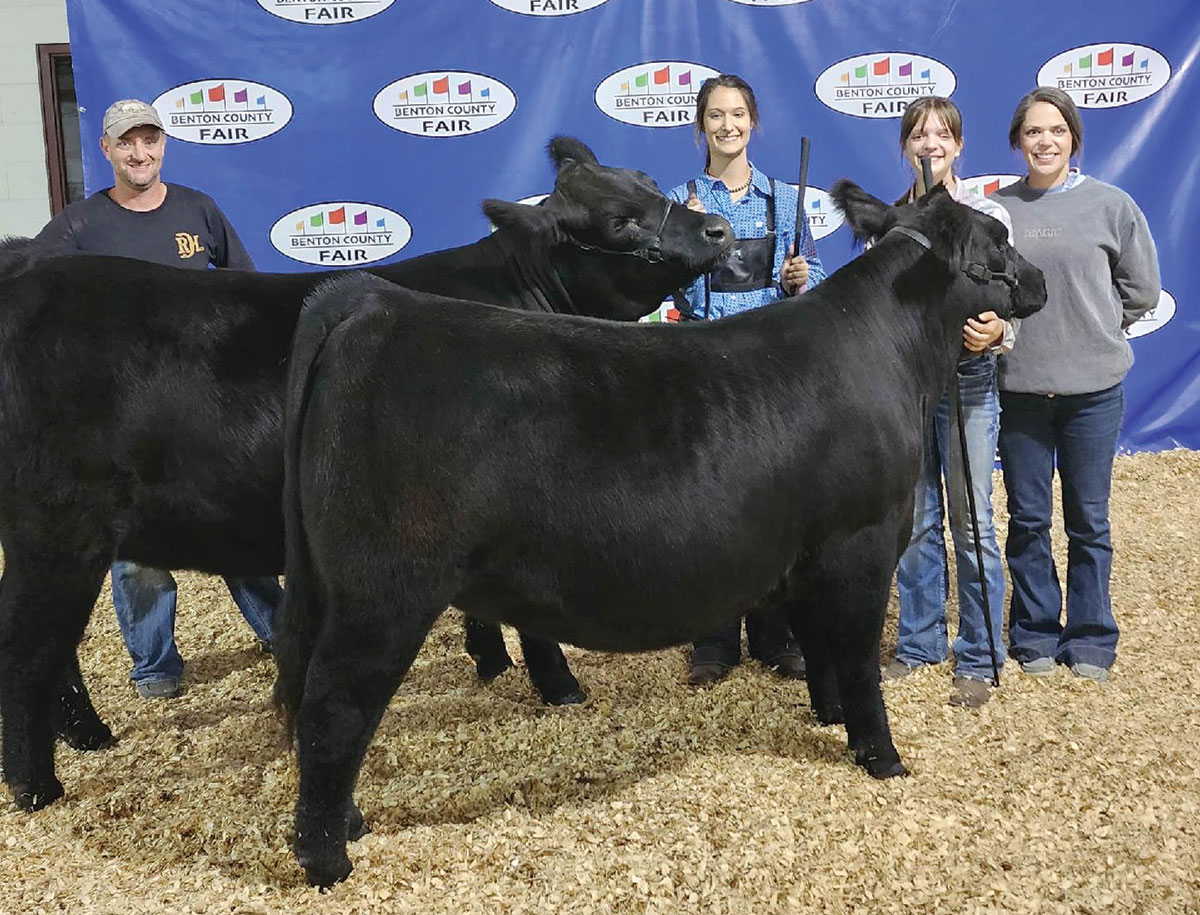
DECATUR, ARK. – In Decatur, Arkansas, Kevin Smith – supported by his wife Jacque and their two daughters, Jacey and Kylie – is pursuing big dreams and taking the steps to achieve them. The poultry industry helped him establish his path to full-time farming, but the cattle market is what keeps him looking to the future.
Smith used to run a poultry house construction company, but now, he is transitioning to working fully on the farm.
“I’m still doing a little bit of poultry service and poultry construction, but I’m a lot more on the farm than I used to be,” he said. “Over the last five years, I have slowly transitioned myself out of the construction business and more so to the farm business.”
This switch from an off-farm career to full-time farming has been a gradual process. However, Smith said he has experienced consistent and steady progress toward reaching his goal.
“I could farm full-time, and I’m getting closer to it every day,” Smith shared.
Making transitions like this requires a balance of attention to current commitments and preparation for future goals. One of the ways Smith has connected his job with his agricultural operation has been through raising chickens.
“We have five houses of chickens. They’re large broilers for Simmons. We raise approximately 120,000, five times a year,” Smith said.
While Smith and his family are heavily involved in the poultry industry through his job and their own family’s livelihood, Smith’s real passion lies not in broiler houses, but in fields full of cattle.
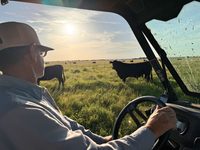
“We have approximately 100 cows,” Smith said. “We’ve got 28 registered Limousin cows, and 65 commercial cows, plus about five bulls.”
They raise these cattle for both the show ring and the sale barn.
“We’re selling a few show calves out of our registered cows, but we’re also selling some replacement heifers,” Smith said.
Replacement heifers are essential to his operation, especially when considering the future of his herd. Smith prioritizes keeping the best genetics as he cycles through cattle.

“Theoretically, we’ll have a set of a dozen bred heifers, and the plan is to sell eight and keep four,” he explained. “We’re just trying to diversify our genetics.”
This diverse genetic pool offers an extra layer of protection as Smith navigates the complicated, unsteady nature of the cattle market.
“One tweak hits the market and knocks it on its nose for ten days, or 30 days, and that’s a tough deal,” he sighed.
However, Smith has learned the importance of resilience not just as a profitable ideal, but as a key to preserving the future of farming.
“I think for those of us in the cattle business, flexibility is probably posing to be our secret to survival right now. The producer has to adapt,” he declared with confidence.
Smith has made adaptability one of the core values of his operation, especially given the current cattle market.
“In this market, I’d like to be a little more malleable,” he reasoned. “If I need to hold my calves for 60 days for the market to get better, I want to be in a position where I can do that right.”
While this is still an area Smith wants to grow in, he is already reaping the benefits of having a mindset of this malleability.
“I think that’s one of the advantages for Jacque and me running our own business. We’re not as stuck in ‘well, that’s the way we’ve always done it’. We’re just trying to figure out what we have to do to make it work,” Smith shared.
Part of their success has resulted from purchasing land in the area. Their farmland spans a total of about 455 acres across Northwest Arkansas.
“We have 40 acres here at the house, 65 acres across town and about another 350 acres of lease ground,” Smith described.
Acquiring land has been an important step for the Smith family, and he hopes to continue expanding.
“Our place across town is a new development for us. We’ve had that property leased for several years, and we just purchased it in the last few years,” he continued. “I would like to purchase more ground.”
In the midst of this new addition, Smith said he hopes to enhance their existing facilities. Their land across town will be designated for calves they will take to market, while their land around their house will be for bred heifers. They are already working to establish the infrastructure to make this possible.
“We’re in the process of building a barn, a new set of working pens, some big holding pens and some tire tanks,” he listed. “We’re trying to get a set of working facilities built so all our weaning calves are at our place across town. I would like to have the ability to feed from outside the fence.”
Reaching these goals is a reminder of the progress Smith has seen in real time, one cow at a time.

“I can remember when we had 25 cows, then watching us get to 50 and now watching us knock on the door of 100,” Smith reflected.
Reminiscing on the past has only helped propel Smith toward the future. Smith said the possibilities that come with this growth excited him.
“My favorite thing is us growing. It comes with its own problems,” he admitted, “but seeing our operation grow has been a real joy.”
Even in challenging seasons, Smith stays focused by remembering the goals he has achieved already.
“When I was 21, 22-years-old, farming was what I wanted to do,” he reflected. “There’s a lot of days when I get up, and it’s not all roses, and I’ve got to remind myself that 20-year-old me would have killed to be here. I dreamed of being able to do this.”
For Smith, this dream of farming has remained steadfast even in the midst of hardship. His values of adaptability keep him grounded as he steps into the future.