

An adventure in goats
NOWATA, OKLA. – Joshua Weir didn’t know much about goats. Despite growing up on a farm, he was more adept at raising sheep.
However, that didn’t stop Weir’s wife, Johanna, from deciding the couple needed to get into the goat raising business after they got married.
“Believe it or not, my wife was a city girl, and I was raised on a farm,” Joshua said. “When we got married, she kind of got all excited about it, and she started researching, and saw that the Boer goats were a pretty new adventure that most people were getting into them. She took a liking to the colored stuff. So, she decided that was the direction she wanted us to go.

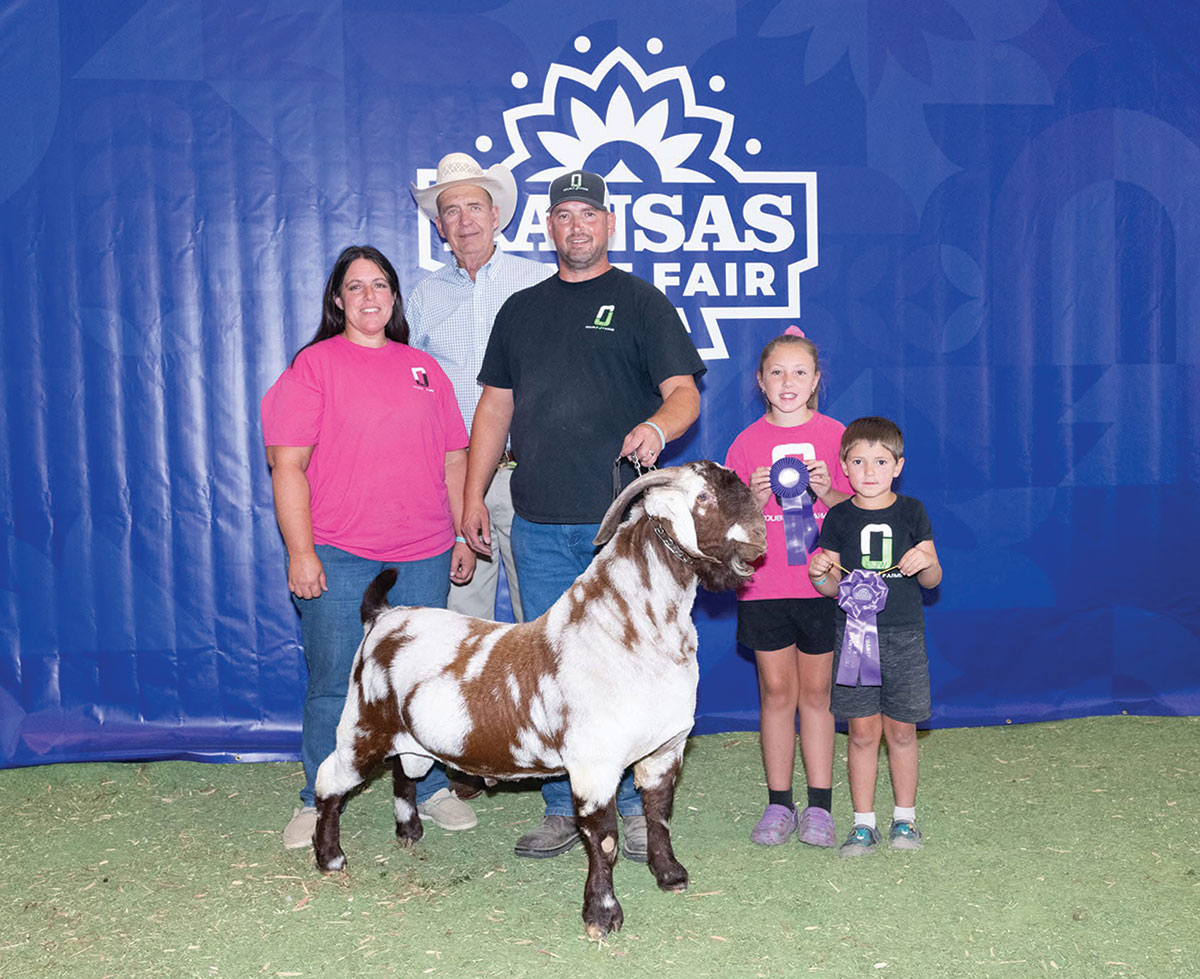
That simple declaration by Johnanna was the start of Double J Farms. For the past 20 years, the Weirs have raised and sold Boer goats off their ranch in Nowata, Oklahoma.
“We got into raising the colored ones, and it just kind of blew up from there,” Joshua said. “It was mainly her thing to begin with. I grew up on a commercial sheep farm, so I’d been around sheep, but not too many goats, and I just kind of let her run with it.”
That appears to have been a formula for success for Double J Farms. In the two decades since they first started, the Weirs watched their small starter herd grow each year.
“I believe we bought about seven or eight commercial goats to start. They were non-registered and they were Boer crosses,” Joshua said. “We just kind of bought them to start eating weeds and to see how we could get along with them. Now we have registered full bloods now. Everything we have, all of our breeding stock is registered full blood.”
It was Johanna who made the decision to go with Boer goats after doing her research. Besides liking how the colored ones looked, the physician’s assistant saw all the benefits of raising Boers over other breeds. That includes financially more lucrative.
“They’re the number one meat breed in the United States. And the association was really backing everybody at the time and having shows and competitions. And it was just kind of a booming market,” said Joshua. “The way we viewed it, honestly, we thought it was a niche market, kind of like ostriches and emus. Everybody jumped in and bought them. And we kind of thought that, you know, we really thought the beginning of the Boer goat was going to be the same way that it was and we’d better get in at the beginning and try to make a go of it while it’s hot because who knows how long it’s going to be like that.”
To the Weir’s surprise, the heat never fell off the Boer goats.

“It actually transitioned into a full-blown aspect of the agriculture, because they’re realizing that the United States imports more goat meat than we can produce because we consume more than we produce,” Joshua explained.
The Weir’s make most of their profits from goat sales, which they attend throughout the year.
“We sell most everything in production sales,” Joshua said. “We just got an award at our sale for the longest-running consigner. The Splash of Color sale is the longest-running Boer goat sale in the country right now. And it is the only all colored boar goat sale in the United States. We got invited into it the second year it was in existence.”
Double J Farms is invited back year after year not only because of the quality of their product, but also because of their reputation.
“I really think that’s probably been our biggest claim to fame is the fact that we stand behind everything we sell to a fault,” said Joshua. “You know, we have replaced animals that it really wasn’t any fault of our own that something was to happen to them or they turned out to have an issue, but we always thought that one animal is not worth killing our entire reputation.”
Currently, Double J Farms herd is around 60 head with five or six bucks. According to Joshua, that is the lowest they have been in the past 15 years.
“There are so many factors that play into it right now. The market is down. I’m going to say it may be at an all-time low since we’ve been in it,” said Joshua. “So we have cut down basically for survival. Those animals that were not as productive as others went by the wayside because it’s less mouths to feed.”
The Weirs aren’t sure if they will get back to raising a larger herd of Boer goats. Joshua says the fact they are not in their 20s anymore and both push 45, is a factor.
Yet, Joshua still remembers what the early years were like and wouldn’t mind seeing them return.