

A Hereford History Lesson
Dr. McDonald Bonebrake has had a long relationship with Hereford cattle. His early days were spent at the family farm in Salem, Mo., working with the Herefords his dad traded for sheep in the 30s. Even after “Mac” left home for medical school he still had a desire to settle at a place in the country, with a few cows of his own. Mac began practicing medicine as an obstetrician and gynecologist in Springfield, Mo., in 1952. He bought a farm east of town, and his dad got him started with a few Hereford cows. That was in 1953.
Grandfather-Granddaughter Pair in Herefords
What does a retired mail carrier and a busy teenager have in common? Other than being a grandfather and granddaughter and wanting to stay busy, Polled Herefords seem to be the perfect answer. Over the years Lendell Voris and his kin have developed a high quality Hereford herd through dedication and hard work.
Your Carriage Awaits
It was the landscape that captured Jerry Peck as he drove through southern Missouri in 1996. Originally from Michigan, Jerry was living in Georgia and was delivering a load of calves to the West Plains, Mo., area. “I went home and told Judy, ‘I’m movin’. Pack up if you’re comin’ with me!’” Soon the couple was back in Howell County looking for the perfect property to buy.
Going Native in Grass
In the heart of the Ozarks, bordering Mark Twain National Forest in Christian County, the 1,100 acres of Bohmont Ranch are often lush and green in the dry months of summer.
The reason, says Terry Bohmont, is the native grasses he grows for pasture, hay and seed. His ranch east of Sparta, Mo., is primarily in pasture and hay. But on 140 acres at the ranch and on other nearby acreage, he raises native grass seeds – switchgrass, eastern gamagrass, Indiangrass, big bluestem, little bluestem and others.
The reason, says Terry Bohmont, is the native grasses he grows for pasture, hay and seed. His ranch east of Sparta, Mo., is primarily in pasture and hay. But on 140 acres at the ranch and on other nearby acreage, he raises native grass seeds – switchgrass, eastern gamagrass, Indiangrass, big bluestem, little bluestem and others.
Horse Dancing
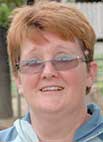
Laura Alms might well be called a “horse dancer.”
In the arena, she is one with the horse she rides. With gentle nudges, infinitesimal shifts of weight and silent direction, she leads her equine partner in graceful choreography. They glide and turn in perfect harmony around their equestrian ballroom.

A Place For All
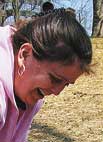
It was a couple of Percherons that got Kirsten and Al Kosinski into the livestock business. After experiencing draft horses on a Christmas tree farm near their home in southern Michigan, the Kosinskis knew a life without a little livestock was no life for them. Two draft horses, 50 goats, a small herd of sheep, three Scottish Highlander cattle, two geese and a flock of chickens later, Kirsten and Al haven’t looked back.
What’s Wrong with that Goat?
Goats have always had a place in the meat and milk markets. Here in southwest Missouri they’re not yet as prevalent as cattle, but herds are popping up everywhere. And then there's fainting goats. Recently there has been a new rise in public interest on the species, but it’s not the Grand Champions or best producers receiving all the attention. Instead, the excitement has been over these “fainting goats.” Major media attention has won these cute and comical creatures some time in the national spotlight.
On the Cutting Edge
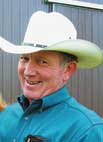
Monty Williamson said of his barn full of cutting horses they are “a play pretty that got out of hand.” In 1992 Monty thought he wanted to get a cutting horse so he bought a couple of fillies to raise and have trained. “There was a period there where you could sell weanlings at a nice price, so I purchased two, three, maybe four more mares,” he recalled with a smile and a sly glance at his wife, Georgia. “I had the good fortune of owning a stallion named Docs Halestorm, and the bad habit of keeping all the fillies. Most of our broodmares are Halestorm daughters.”
Cattle V. Ethanol
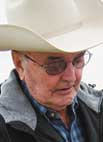
With the familiar economic downturn, rising gas prices and a steady increase in food and energy costs, what, if anything, is to blame? Could one of the main contributors of these problems be something so cleverly disguised as corn based ethanol? According to BJ Neill of Bolivar, Mo., the answer is “yes.”

Breed the Best and Ride the Rest
Breed an average cow to an average bull and no matter what color or breed, the end product is beef and it can be sold at the sale barn or put on the table.