
Balancing animal welfare and quality pork
EVERTON, MO. – Grease sizzles in the pan as the distinct savory smell fills the kitchen. Eyes widen with anticipation, and mouths begin to water. Everyone knows the excitement surrounding the classic American breakfast food. However, few are intimately acquainted with the hard work, intentional dedication and hours of laborious research it takes to put bacon on the table.
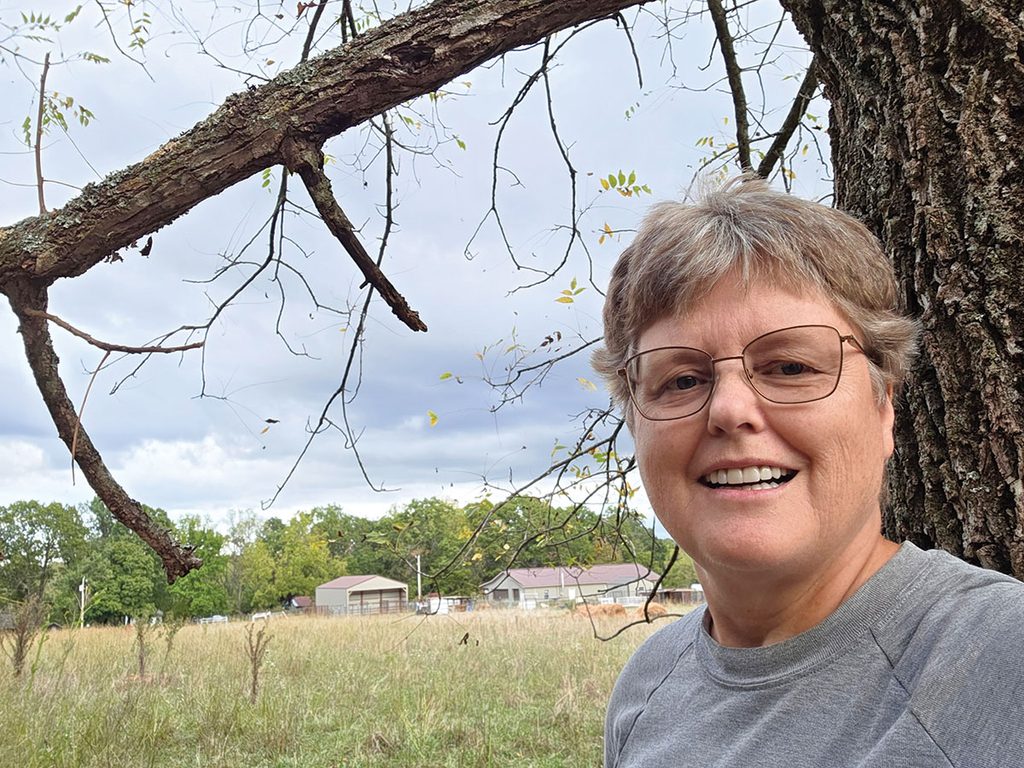
Paula Hartzell of Everton, Missouri, truly has a passion for digging deeper into what the world has to offer, whether it’s medicine, science or agriculture. Her curiosity has led her to research papers, scientific articles and, most notably, pigs.
“I became interested in the Mangalitsa because of the novelty,” she remarked.
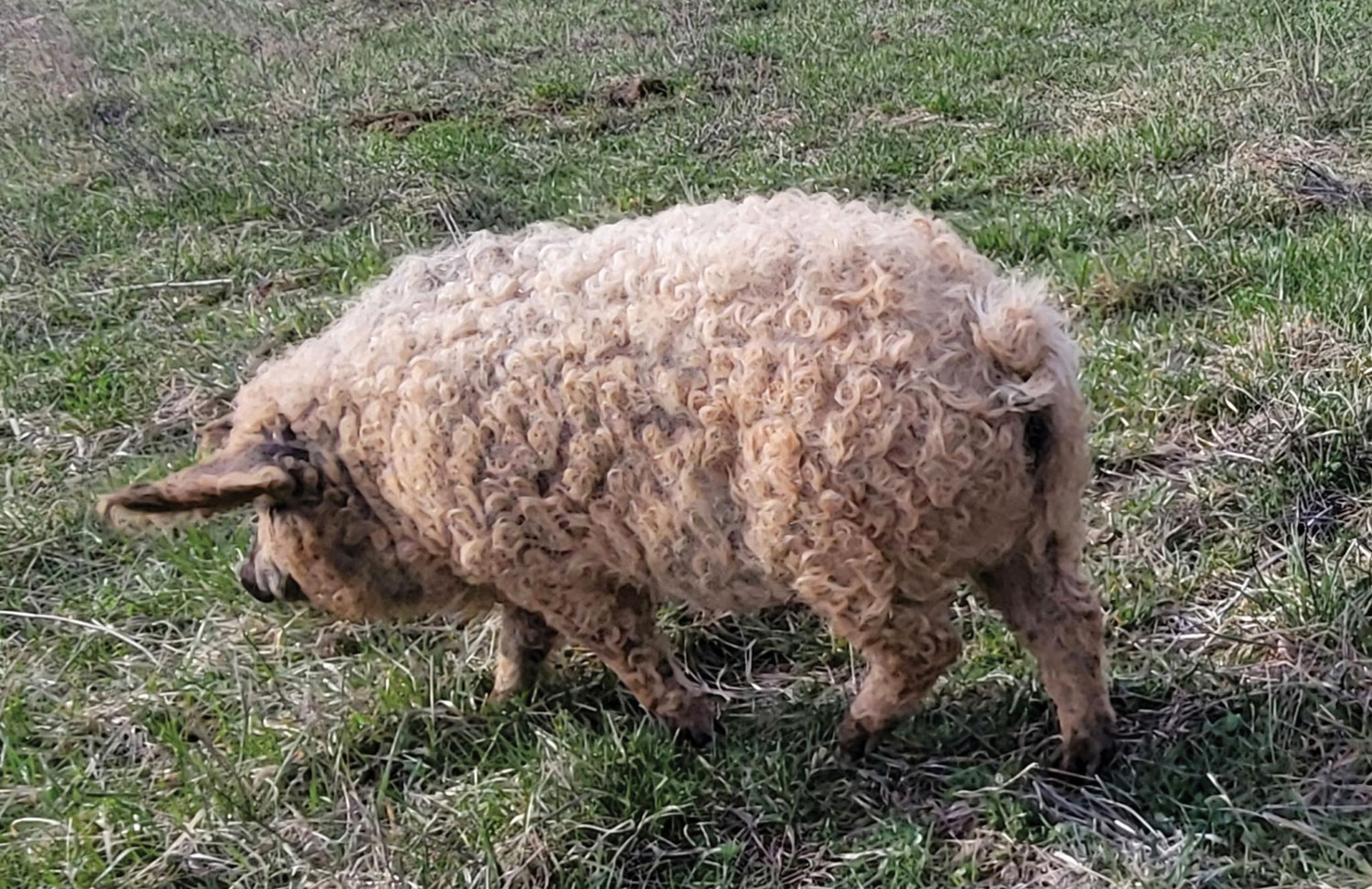
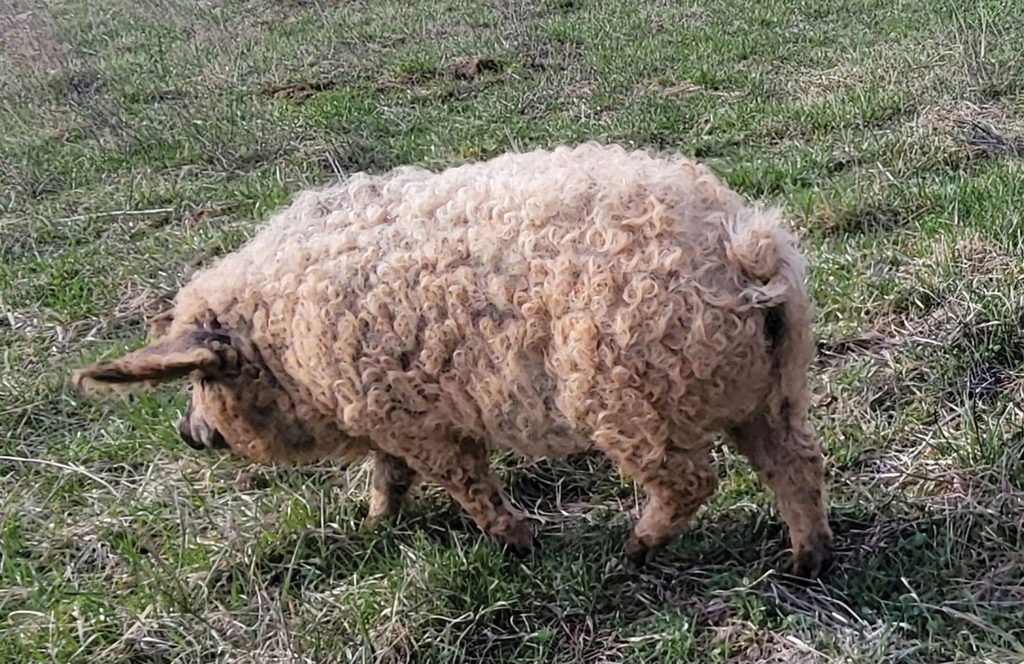
The Mangalitsa breed originated in Hungary, so it is still relatively unfamiliar among American consumers. These hogs are highly unique, but there is one trait that immediately distinguishes them from other breeds.
“I saw these curly pigs and looked more into them,” Hartzell said. “They’re the only pigs around the world that have a curly coat.”
Hartzell described her pigs as both “interesting” and “fun-looking,” but there is much more under their curly fur. Mangalitsas produce pork with many health benefits, a factor that thoroughly captured Hartzell’s attention, especially given her background as a physician. During the 25 years she spent in the medical field, she developed a particular interest that has continued even in her retirement.
“The fatty acid profile is a big part of why I’m attracted to this breed,” Hartzell confided.
This fatty profile includes a special combination of omega fats.
She said that while lard from all hogs contains omega-9, Mangalitsa is the only hog breed that has both omega-9 and omega-3. This inclusion of omega-3 is important to understanding the health benefits of Mangalitsa pork.
These health benefits have led Hartzell on a new adventure as she expands her hog operation.
“I am on a quest for healthy bacon,” she boldly declared.
Hartzell’s journey pushed her to try crossing different hog breeds. Hartzell grew up on a Duroc operation, so she combined her knowledge of Durocs with what she was learning about Mangalitsas.
Crossing Mangalitsas and Durocs is a relatively new concept, but research in Europe has offered some valuable insight and encouragement to this endeavor.
“From research in Hungary, crossing the Duroc with Mangalitsa seems that it keeps the Mangalitsa’s fat profile, but there’s more meat on it, like the Duroc,” she described.
This research “rabbit hole,” as Hartzell refers to it, has been full of complex genetic and scientific facts as well as some trial and error. However, it does not come without reward.
“At any rate, I’m producing good pork,” she chuckled.
Her pork provides a healthier fat profile, and the taste has even been compared to that of Wagyu beef. Customers seeking tastier, healthier alternatives can purchase products directly through her website, hartzellfarm.net.
Running a hog operation is no small feat – especially when her management methods are nontraditional.
Despite the challenges of working solo, Hartzell continues to succeed through intentionality and consistency.
Although Hartzell runs her operation alone, she is far from unfamiliar with the agricultural sector, given her background on a Duroc operation. However, stepping into her own hog operation has given her an entirely new perspective on hard work.
“I understood that growing up on a farm, I didn’t know all about farming,” Hartzell remarked. “I was accustomed to hard work, but farming is hard beyond the physical labor.”
Most of the challenge has come from learning to distinguish the difference between working on a farm and managing a farm.
“I was familiar with the jobs that need to be done when somebody tells me to do the jobs, but this is more of the actual farm management, deciding what direction you’re going to go,” she explained. “The biggest change has been being the farmer making all the decisions and being much more involved in the health of the animals.”
As Hartzell has stepped into the decision-making role, she has prioritized developing the best environment possible for her animals. She said she aims to improve both the forage quality as well as the pasture rotation on her property.
“The goal is to rotate animals across pasture so that as they use up that pasture, then you replant or develop something that’s permanent and will come back as you rotate animals off of it,” she reasoned.
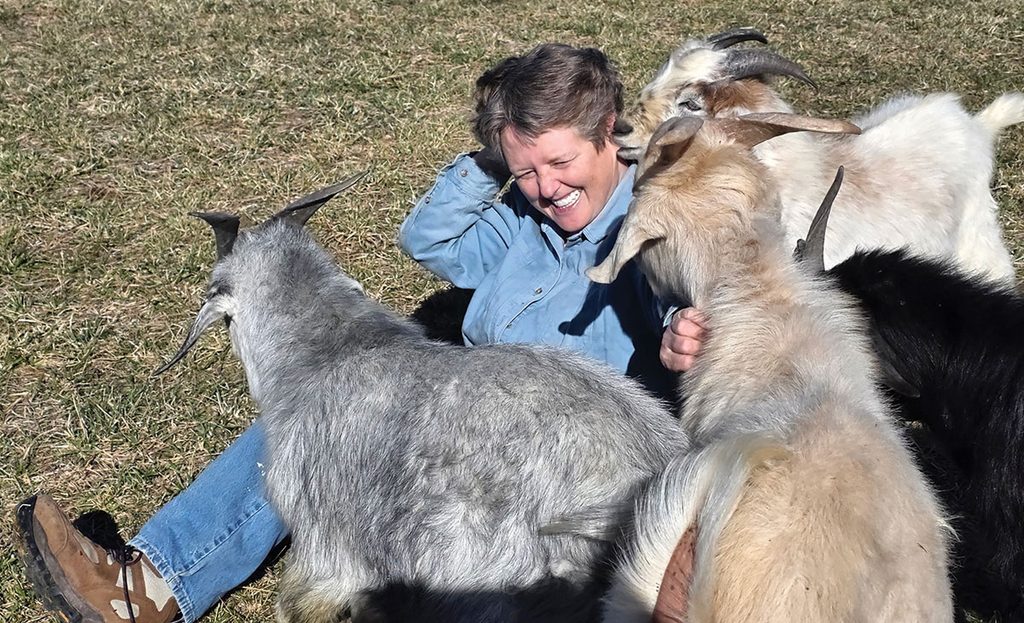
Another way she has improved her forage is through the introduction of goats. She specifically chooses meat breeds, like Boer and Kiko, to help diversify the meat she sells, but they also help maintain her pasturelands.
“They actually have cleaned up my area of hay fields,” she said. “They pick out the things you don’t want. There’s a lot of bushes and thorn trees, and they’ve actually cleaned that up to make it better for foraging for other animals.”
The same intentionality Hartzell has in growing quality forage extends to her treatment of the animals. She said her pigs are both approachable and accustomed to people, which is one of her favorite parts of farming.
“Mangalitsa are known for being very pleasant animals,” she commented. “I can get in the pen with all of my boars and rub them on the back, and the sows are the same.”
At the end of the day, Hartzell has one goal in mind.
“We want our animals to be happier, and we want our meat to be healthier,” she concluded.
Throughout the joys and the challenges of farming, this is what keeps Hartzell focused: a balance of animal welfare and quality pork, benefiting all involved.