

Satterfield Farms is Making Strides in the Show Ring
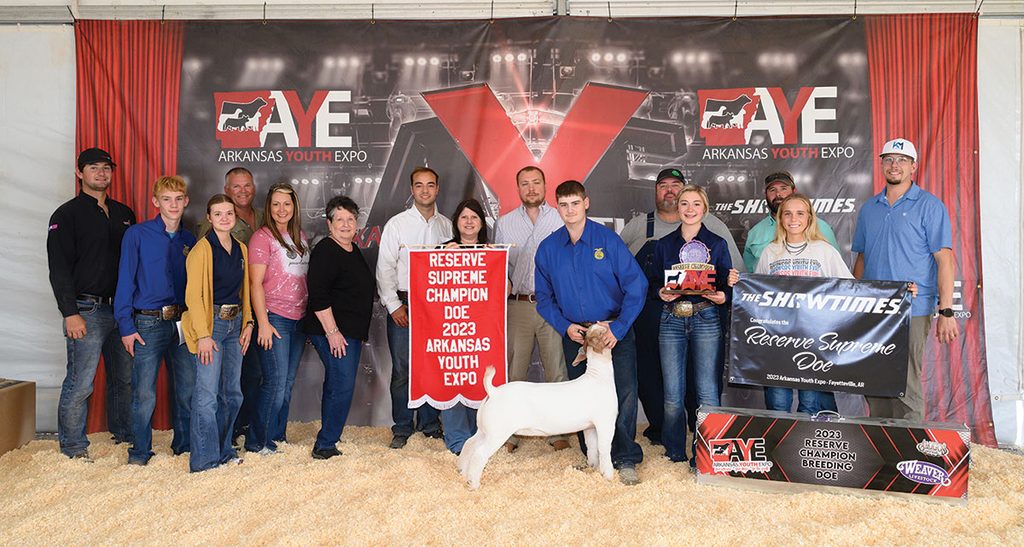
NORFORK, ARK. – What began as an FFA project for two children in Norfork, Arkansas, has ultimately grown into a thriving contributor in the show goat industry. In the past four years, Mark Satterfield, his son Justin and the rest of his family have transformed their cattle farm into a highly successful show goat operation. Although the family still runs commercial cattle, goats are their main priority.
“We put most of our time and energy into the show goat operation,” Mark said.
He explained that the transition to goats started out as an FFA project for his kids. His oldest daughter took the first step in wanting to show goats, and she was quickly followed by her brother. From there, the operation expanded, supplying families with the highest quality of show goats possible.
“We got good families to work with, then it kind of just soared from there,” Justin reflected.
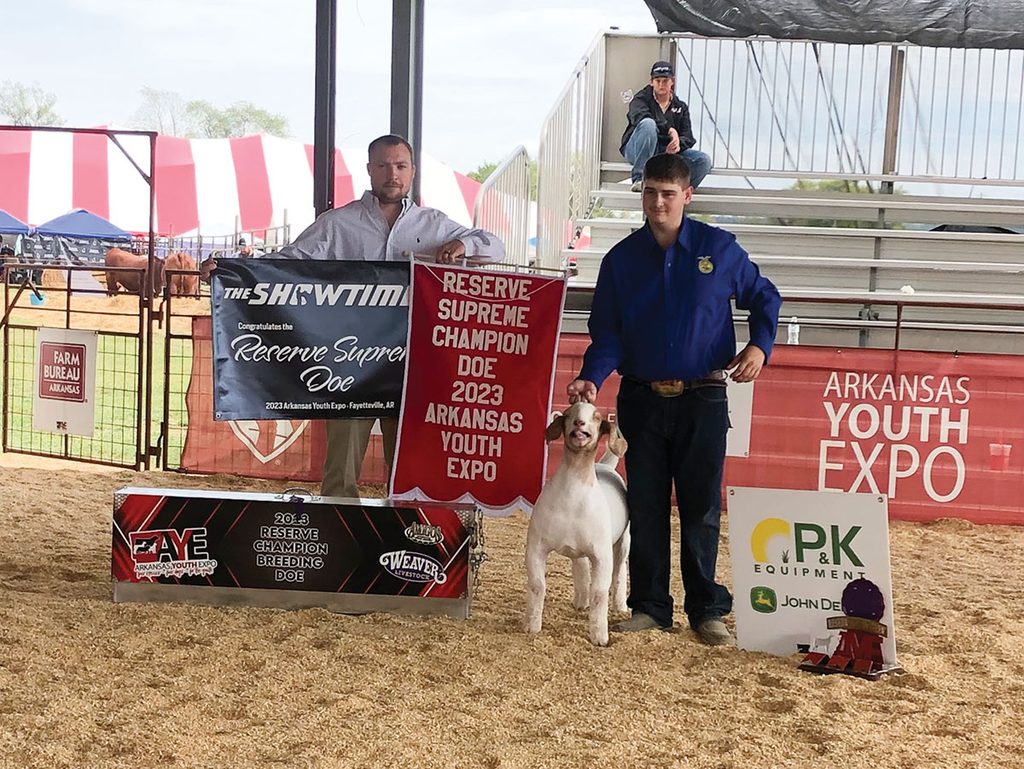
The Satterfields raise show goats with elite wether genetics. While known for their adaptive nature, raising and managing a herd of show goats presents a unique set of challenges. The Satterfields breed their goats using artificial insemination (AI). Although they were familiar with AI from their cattle operation, it required an element of re-learning as they adjusted the process for goats.
“That’s the biggest learning curve,” Mark explained. “You learn to handle them a little differently.”
In addition to learning breeding techniques, the Satterfields also had to learn how to manage goats on a much different timeline than what felt familiar.
“It’s super fast-paced compared to cattle,” Mark commented. “If we bred a cow and a goat on the same day, that goat will have its baby, and we wean it and have it sold before that cow ever has her baby.”
One of the most helpful ways they have learned to navigate this quick turn-around is by timing breeding and kidding seasons around when exhibitors will need goats for fairs, jackpots and other shows. At the same time, they also plan around conditions that yield the most favorable conception rates due to pregnant does’ sensitivity to factors such as weather fluctuations and loud noises.
“These goats are pretty high strung. It’s not like your normal pasture goats,” Mark shared, “but that’s what I enjoy, because it’s a real challenge to me.”
About eight weeks after birth, the kid is weaned, moved to a bigger barn and grown out until they are ready to be photographed and marketed to potential buyers. Once the goats are sold, show preparations begin. The Satterfields don’t see the goat for several weeks, giving it time to settle in with its new family. However, they still remain in contact with the family.

“After that, it’s getting them to the backdrop and trying to do as much as you can to get it in the kids’ hands,” Justin remarked. “We help the moment it gets sold to the moment it quits showing.”
Their main goal is to ensure that the exhibitors are comfortable with their animals long before they step into the show ring. For many, this requires daily commitment to several hours of washing, handling and working on showmanship. While the Satterfields are present in each of these aspects, they place a special emphasis on feed.
“Leading up to shows, we’ll start controlling the feed a little bit differently,” Justin said.
One crucial component of a show goat’s diet is mineral consumption. To maximize the potential of their herd, the Satterfields developed their own mix of breeder pellets infused with minerals to make sure every animal receives the nutrients it needs.
“We want an ounce of mineral in them every day, every one of them,” Mark clarified. “That’s how we do it, and it works really well.”
While kidding and show seasons can be busy and demanding, much of the operation revolves around a consistent rhythm. Their days are bookended by feeding their herds in the morning and evening, and they are constantly regulating breeding cycles and schedules in order to provide their customers with the healthiest goats possible.
“Right now, it’s a fairly small operation,” Justin shared. “We tried for the longest time to keep our numbers down but raise the quality instead of just being about the numbers.”
The foundational focus of the operation is seeking out strong genetics. According to Justin, a successful show goat is distinguished by the operation it came from. He said they ask questions such as ‘who raised it?’ and ‘where did it come from?’ to determine the validity of the genetics.
“Once we figure out that it’s come from a successful line of genetics, then we start looking at a pedigree,” Justin continued.
Pedigrees show the record of an animal’s lineage, including notable achievements or performances in the show ring. He said they tend to gravitate towards trends such as a stout skull, strong ribcage, tall shoulders, fuzzy legs, and smooth movement.
“There’s a lot of factors that play into it, but we’re just wanting a sound and functional goat, but something that’s got some ‘wild factor’,” Justin said. “It’s hard to make those pieces, but that’s what we’re ultimately looking for.”
As the Satterfields look toward the future of their operation, expansion is at the forefront of their mind.
“The end goal would be around 200 to 300 head and probably about 60 to 90 head of donors,” Justin shared.
However important growing their operation may be, the root of their success is found in the people they have met and the connections they have made through sales and shows.
“Keep finding good families,” Justin concluded. “That’s the main thing. If you ain’t got good families, then you ain’t really got much.”
As their operation continues to grow, the Satterfields remain dedicated on two priorities. While their ambition is for the farm to increase in numbers, they have found that success is rooted in providing high quality genetics and connecting with other families.