

Over 50 years in the Angus industry
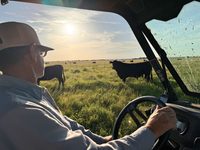
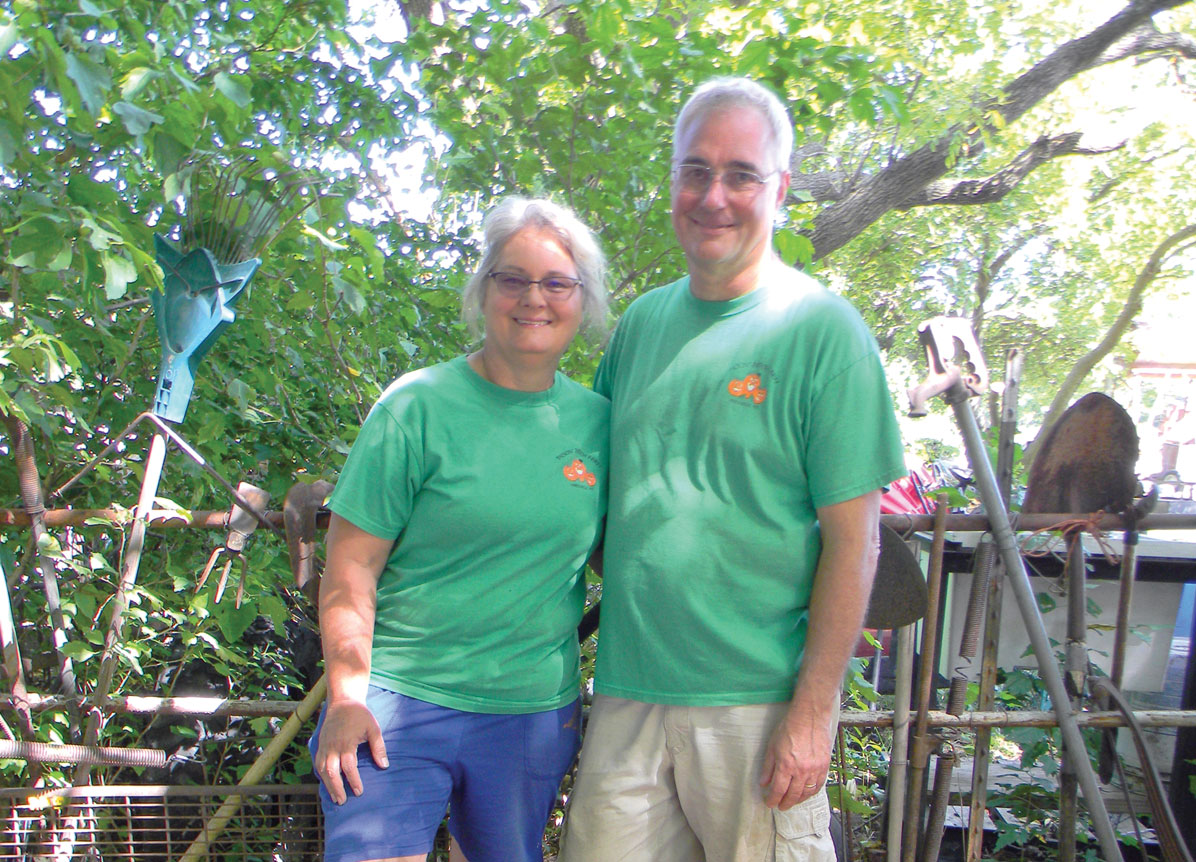
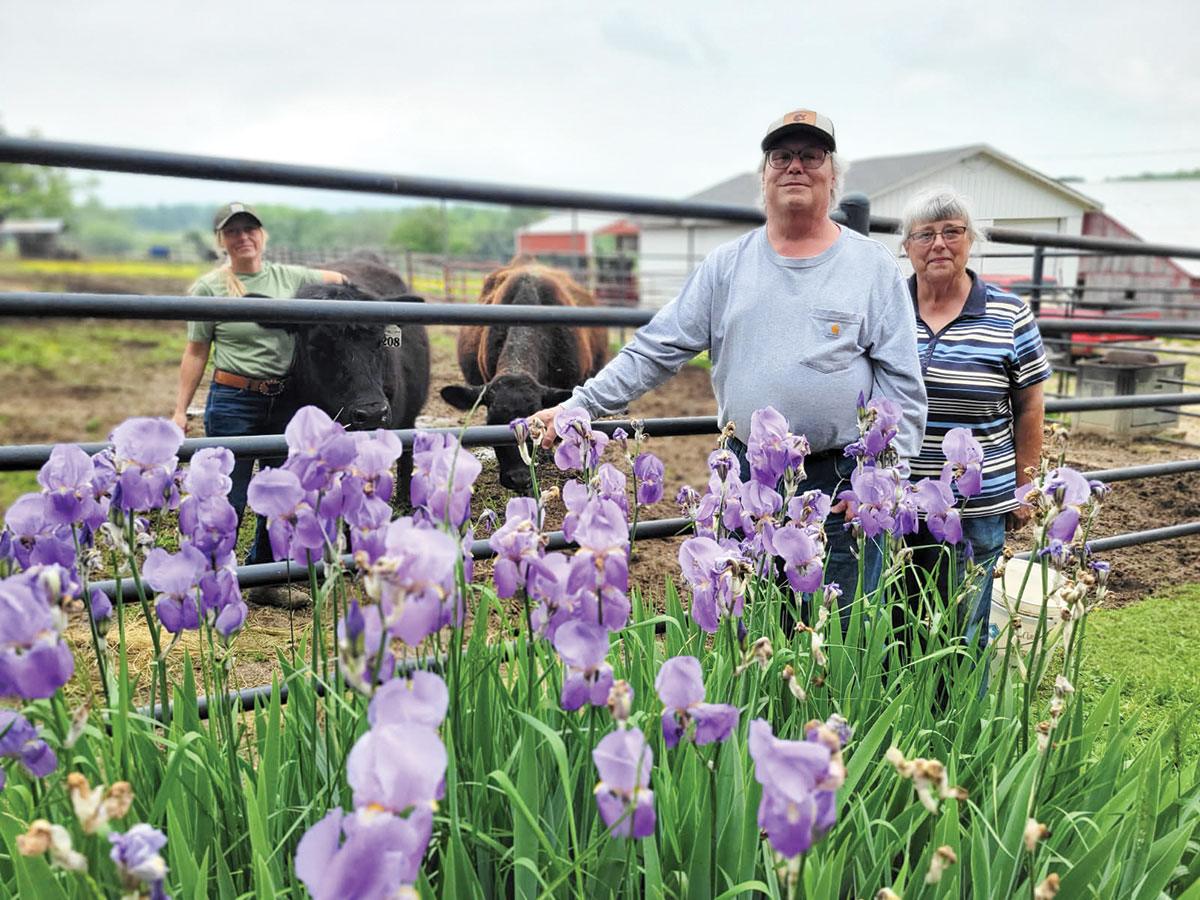
WILLOW SPRINGS, MO. – Truman Wiles, his wife, Pam and their daughter, Phoebe raise registered Black Angus bulls on two farms on a total of 400 acres in Howell County on the outskirts of Willow Springs, Mo.
Life on their Wiles Ridge Ranch keeps them all busy these days but it has not always been that way.
While both Truman and Phoebe have degrees in Ag-Economics, Pam was an elementary school teacher in various grades and positions at Willow Springs Elementary for 30 years. Meanwhile, Truman had earned his law degree from the University of Illinois-Champaign-Urbana. He went on to become an assistant prosecuting attorney and then a prosecuting attorney. In addition, he served as an associate circuit court judge in Howell County for three terms, a total of 12 years. While there he helped to establish the Howell County Drug Court.
“When I first ran for office, someone told me, I know you. You can’t run for judge. You’re a cowboy! And when I retired, my co-workers laughed and said, other retired judges go into private practice or teach law or something similar but we all knew where you’re going–back to the farm! And they were right. I think I’ve only been back to the courthouse about three times in the last many years.
Their daughter Phoebe worked as a commodities broker in Chicago briefly before returning to Missouri to work on her Ph.D. Shortly after that, however, she returned to Willow Springs to help on the farm, when her father suffered a near fatal health crisis. Since that time, Truman has made an amazing recovery from complete paralysis on his left side.
Although she left the business and academic world behind to return to the farm when her family needed her, Phoebe has no regrets. She followed the example set by her parents years before when they left Illinois to return to Willow Springs when Truman’s father’s health had deteriorated and they were needed back home.
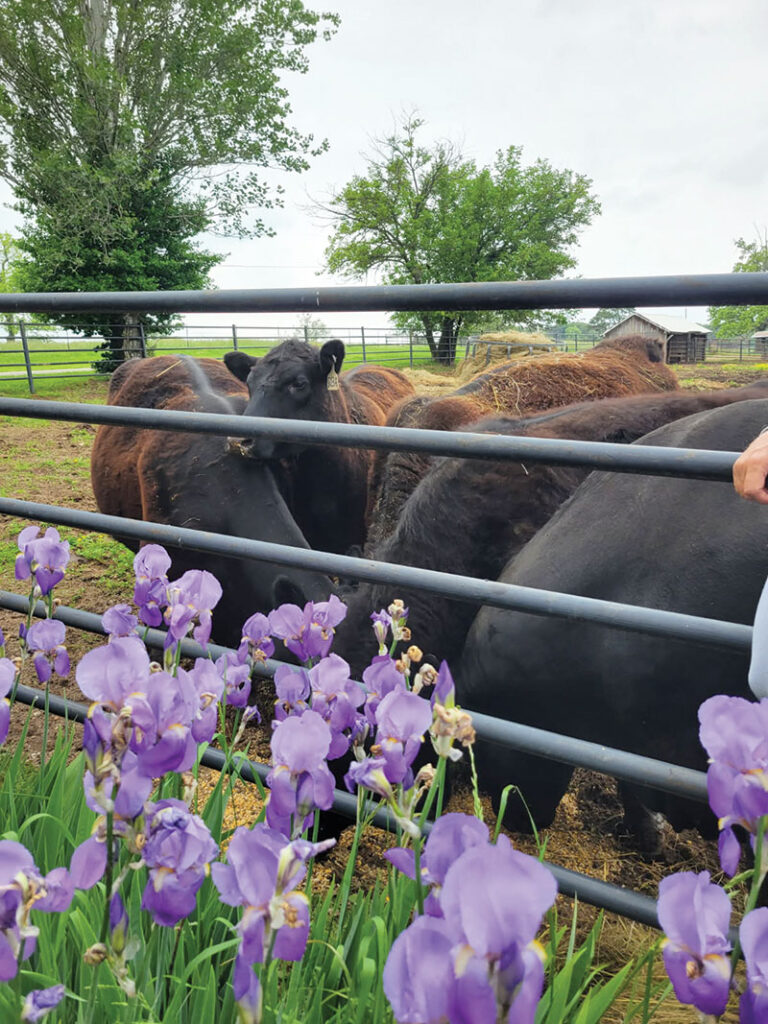
Despite her diminutive size, Phoebe moves easily amongst the huge bulls that she calls by name. “I grew up around the cattle and I like the cows,” she added.
Fortunately, for their family, a tradition begun by Truman’s parents, Truman and Mary Ann Wiles, along with their daughter Phoebe, enjoy the engineering and financial management side of today’s modern farming operations.
“People underestimate how detailed farming is today. It truly is a science,” Pam stated.
“In dealing with EPDs with today’s registered breeds, it is a highly technological business,” Truman explained. “We’ve done genomic testing on 95% of our cattle for the past 15 years. Every calf is tested. Both Phoebe and I are technologically-minded so it’s second nature to us.”
The study of EPDs and genomic testing are ways to score the likelihood of a wide range of genetic outcomes, according to Merriam-Webster.
Truman continued. “Our aim is to raise sound bulls for commercial breeders. We raise them in such a way as to get them accustomed to barbed wire fences and electric fencing. The best environment when one is searching to purchase a bull is to look for animals raised within a 100-mile radius. In our world that means animals raised on fescue. We also look to raise bulls that are gentle. Phoebe is the expert in that. We teasingly call her the ‘bull whisperer’.
“As our farming population ages, the gentler animals become even more important,” he added.
According to the 2022 Census, the average age of the US farmer is just over 58 years old.
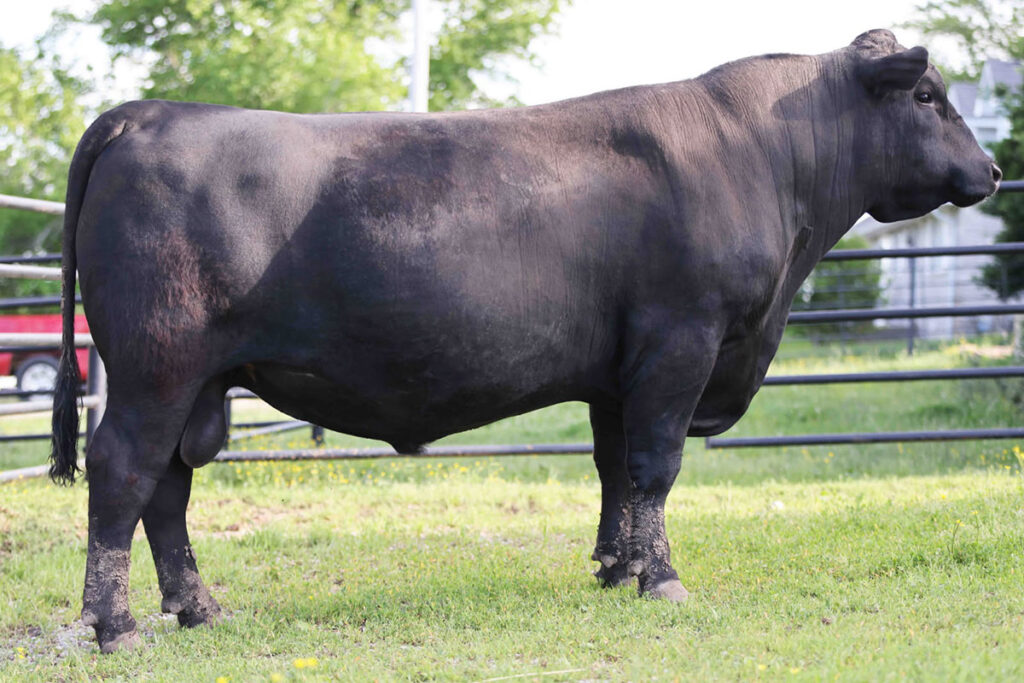
Truman went on to explain that he strives to produce cattle that have a better stronger frame. “We want functional females, not fat ones and the same for the calves. We work to produce cows that calve at 24 months, and then calve every 365 days. We’ve shortened their gestation period by about seven days. By doing so, they produce calves that are not too big, as that makes for much easier calving. Some of our customers have told us, their first thought upon seeing the new calves is that they are kind of on the small size but they soon discover, that makes for easier calving and yet they gain weight quickly and are soon exploding in growth.”
“I bought my first registered Angus in 1967, as did my parents. Some of the cattle we have today are descendants of that first animal. It takes all three of us working to keep all of this going with the registered breed but it is what we do.”
He concluded. “For over 25 years now, we’ve been raising bulls that have the qualities that our customers are looking for. It means the most to me to have repeat customers come back and tell us how happy they are with the bulls they got from us before and how well they worked for them.”