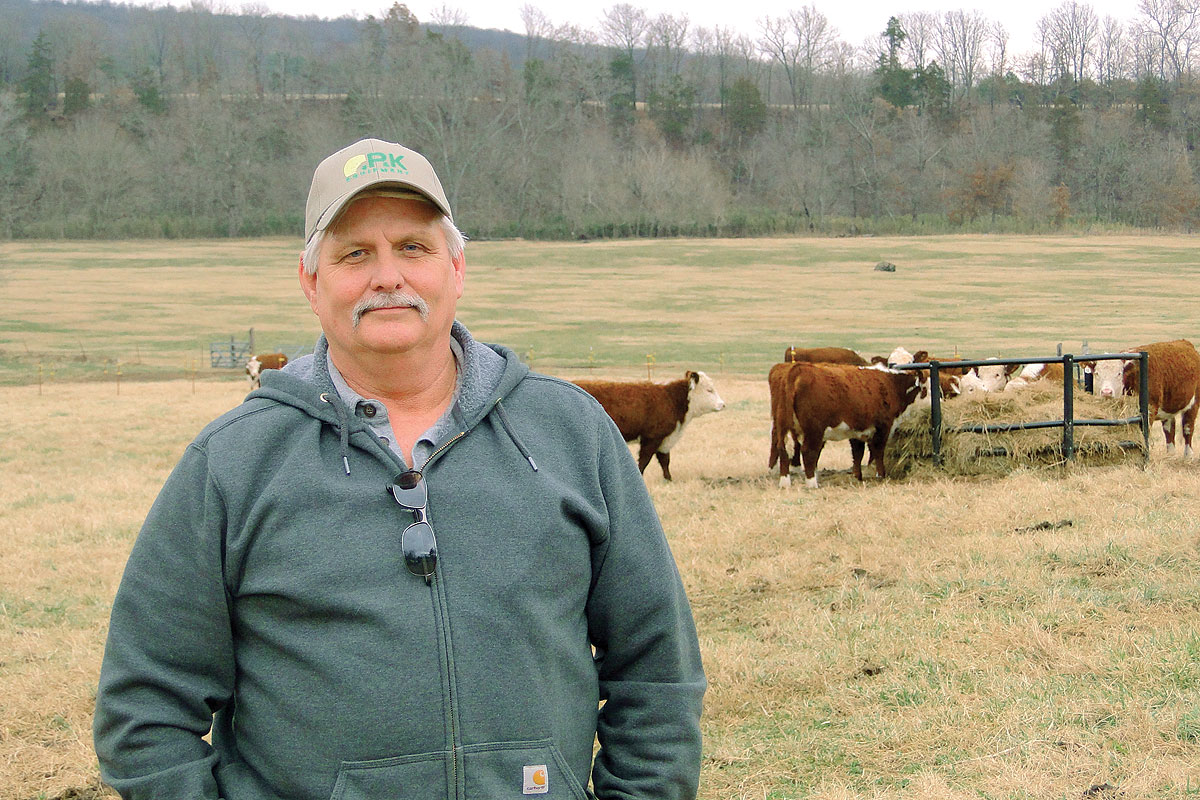



“I spent the first half of my adult life trying to be a captain in American industry and the second half trying to get back where I started from; on the farm,” Rob Bullock, a full-time farmer in West Fork, Ark., said.
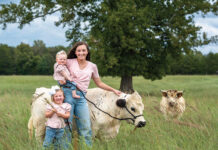
Rob explained that the farm provides the lifestyles and values he wants for his family, which includes his wife Sara, daughter Vivian who is 6, and sons Brandt Ross, 3, and 1-year-old Bryson.
Both Rob and Sara come from generational farming families. Five years ago, they incorporated Sara’s family farm with 500 owned and leased acres primarily devoted to a cow/calf operation. Rob and Sara now run the corporation called Bullwick Farms with Sara’s father, Johnnie Hartwick, a long time master electrician for Marrs Electric, who still occasionally helps.
The farm has 40 mommas that are mostly black Angus with some Simmental and black baldy mixed in. They also have one red Angus cow, originally owned by Sara’s grandfather, that is now 20-plus years old and still producing good calves.
Currently the couple is looking to expand and enlarge both the cattle operation and their fall festival pumpkin patch and petting zoo, which is open from the last weekend of September to the end of October.
Sarah explained that the “crazy” idea for the pumpkin patch and petting zoo was really hers and that her husband was somewhat reluctant at first. She always loved a variety of animals and knew other children, besides her own, would appreciate being able to get close to them.
Because the farm is conveniently located only 4 miles off Interstate 49 at the West Fork exit on Highway 170, she felt it offered a balance between a real farm and a totally child-centered experience. In addition, the location was closer to the Fayetteville, Ark., population than others in the area.
The attraction is open Wednesday through Friday from 3 to 9 p.m., Saturday from 10 a.m. to 9 p.m., and Sunday from 11 a.m. to 6 p.m., with other times available for groups such as grade school field trips, moms clubs and fraternities and sororities.
“We use 35 acres for the pumpkin patch and 15 acres up in the hilltop pasture for a hay ride, Sarah said. “This year we have added a 200-foot long zip line, 50-feet off the ground and capable of holding up to a 300-pound rider.”
This agritourism attraction offers a large variety of animals including fainting goats, alpacas and Juliana pigs, as well as a corn pit, which is like a sandbox with a slide, a child-friendly hay maze, old time cut-out picture stations.
They sell pumpkins, from tiny pie varieties to what are called “prizewinners” that weigh around 100 pounds. Favorite varieties include Princess and Cinderella pumpkins, which are flatter and approximately 10 pounds, as well as white ones. This year Vivian is excited about running the lemonade section of their concession stand as her contribution to the family business.
Rustic campsites with porta potties are also available for groups such as the Boy Scouts.
One unusual aspect of the pumpkin patch is the use of a cotton trailer as a hay ride. These wagons were used for 50 years to haul cotton from the field to the gin; and while many of them have been scrapped, a large number remain piled up in various places. Rob bought four in order to make a unique hay wagon that allows the children to safely move around while the wagon is in motion.
“Safety for both the consumer and the animals is our highest priority,” Rob said.
The Bullocks keep 10 different varieties of feed to make sure all animals get exactly what they need. They are also expanding pumpkin markets which includes selling pumpkins as fundraisers for a local Montessori school in a farm fresh produce project.
“Although we are in the developmental stage, this attraction will provide an important supplemental income stream. Right now all profits are being turned back into business development,” Rob added.
Bullwick Farms has access to a total of 500 combined owned and leased acres. Johnnie began the cow/calf operation in the 1990s as part of his town and country lifestyle while Sara’s grandparents, Paul and Charoline Hartwick, raised both chickens and cattle.
Some important characteristics of the Bullock Farms’ operation include haying Johnson grass, which Rob admits must be monitored carefully to prevent cyanide poisoning when the grass gets stressed. He feels, however, that the high nutritional content, only bested by alfalfa hay, is worth the extra management and care. Rob also neither bands nor castrates his bull calves because he sells some for breeding and makes the best profit by not cutting any of them even though he gets a slightly lower sale price at the sale barn in Springdale, Ark. Calves are typically kept until they are yearlings and are line-weaned once the calves are mature enough to graze on grass to make the process less stressful.