
Horses and Longhorns
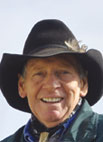
Quarter horses, some Appaloosas, Long Horn cows, polled Charolais bulls, chickens, dogs and grandkids: You’ll find them all on Leroy and Sharon Uber’s farm in Stone County. They were honored in August at the Missouri State Fair as the 2009 Stone County Farm Family.
A Distinction Limousin Brings
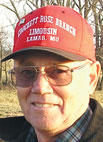
Most people are a little wary when approaching a large group of cattle, as they should be. But that fear is unwarranted at the Crockett Rose Branch Farm near Lamar, Mo. The Crocketts fullblood Limousin cattle make people feel like part of the herd. It is no surprise that docility is one of the traits that Danny and Connie Crockett select for.
Boer: The Angus of Goats
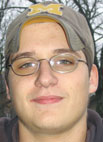
Kyle Tate began raising Boer goats when he was in sixth grade. “My dad and I put up some hay for some friends of ours and their neighbors had goats. I wanted to try it and here we are,” said the Mtn. Grove High School senior. “Here we are” for Kyle means, among other things, being in his second term on the national Board of Directors of the American Junior Boer Goat Association; winning numerous championships at livestock shows in several states; making friends all over the country; and winning the FFA Area Proficiency Award for his goats.
These Sheep Rough It
It was on a farm in Newton County, Missouri, that Doyle Weaver was raised in agriculture. “I started helping on our farm as soon as I was big enough to get up and get around,” he said. The Weaver family milked cows until the milk market was no longer profitable, and then they transitioned into a beef cattle operation. Doyle grew up attending school in Seneca, Mo., and though the school had no formal agriculture programs, he continued his work on – and love for – the family farm.
Cattle That Will Work
Clint Hunter is pretty specific about the way his family runs their cattle business. “If you stay in the middle and don’t chase the different fads the cattle industry offers…” He paused; choosing his words carefully before continuing, “If you stay in the middle, they’ll always come back to you. We’ll just leave it at that.”
Building The Breed
The Rankins found Brahmousin cattle at Farmfest. A producer out of Lamar was showcasing them. For years, Butch and Sandy had Registered Santa Gertrudis. But Butch consistently liked Brahman-influence in a cattle herd. “We like the Brahman influence in cattle,” said Butch, adding, “In this part of the country we have more hot days than cold. With a Brahman influenced animal, I don’t have to have as quality of pasture or as quality of feed to still have gain. I do feed as quality of pasture and feed as I can, I’m saying you don’t have to have that to see gains of upwards to 40 lbs. per calf at weaning time over other breeds.”
From Corn to Quail and Back
For some Ozarks farmers, staying on the land is a question that must be decided based on economics, family dynamics and other factors. For Matt Young, the seventh generation on his family’s land, it is not a question of staying, it is simply a question of how. Matt, his wife, Winter and their children, Madison age 11, Hanleigh, 7 and Landon, 4, hold the original Homestead Act paperwork on their farm that was signed by President Ulysses S. Grant.
Seventh Time Around
Denny and Mary Beth Pogue live on their family farm that is equidistant from Rolla, Salem, and St. James, Mo. Their home is Mary Beth’s grandparents’ house that was originally built in 1918. “I work in Rolla, Denny works in Salem and we have a St. James address and phone,” Mary Beth laughed when explaining their situation. Their son, Orin, a Drury University student, and daughter Adrian, a senior at Rolla, are the seventh generation to live on their land.
Cattle Inside and Out
For generations, cattlemen made decisions based solely on what they could see. They looked across their pastures and watched their herd graze and grow, bred the cattle they thought best, and then they watched the next generation. It was only after the animal was sold or butchered that they were truly able to know its worth.
Quick Attach Alleyways
A teasing comment from his son, Ryan, may very well have inspired Randy Kell of Raymondville, Mo., to invent his Double K Alleyway, a quick attach alleyway that transforms a common livestock trailer into a cattle working station in five minutes or less.