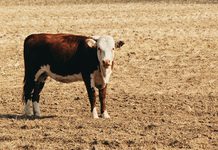

Heifer selection and health management strategies for successful development
“Heifer development is critical as cattle producers rebuild their herds,” says Patrick Davis, MU Extension livestock field specialist.
Successful development starts with choosing the right heifers and using effective health management strategies, whether for your own herd or for buyers of your heifers.
Davis shares practical guidance for selecting and developing heifers that can thrive in either setting.
“Select the right heifers to support successful development,” says Davis.
Key factors to consider when choosing replacement heifers include:
Prebreeding exam. A veterinarian performs this exam by rectal palpation 30 to 60 days before breeding season. It assesses pelvic area (PA) and reproductive tract score (RTS). RTS is rated on a 1-to-5 scale, where 1 indicates an infantile tract and 4 or 5 indicates adequate maturity for pregnancy. For optimal pregnancy rates, select heifers with an RTS of 3 or higher and a PA of ≥ 150 cm 2 at prebreeding.
Genomic testing. Genomic testing can identify heifers with genetics that align with your goals and your customers’ needs. This information can also strengthen marketing efforts and may increase sale premiums. Choose a test based on breed and the traits you want to evaluate.
Structural soundness. Selecting females with sound feet and legs supports herd longevity. Evaluate claw shape, foot angle and rear-leg structure from the side. These traits are typically scored on a 1-to-9 scale, with 5 considered ideal and scores from 3 to 7 considered acceptable. For more information, see the Red Angus Association’s foot and leg scoring guide at https://tinyurl.com/REDANGUSGFLSG
Body size and condition. Target heifers that are 55% to 65% of mature body weight and have a body condition score (BCS) of 5 to 6 at prebreeding. BCS measures fat cover on a 1-to-9 scale and relates to energy status and reproductive performance. Using both measures helps identify heifers at the right weight and condition for optimal pregnancy rates.
“Work with your veterinarian to develop a sound health, vaccination and parasite control program,” says Davis. MU Extension Guide G2044 provides a framework for building an effective herd health program.
During the prebreeding exam, test heifers for BVD-PI and cull any that test positive. Doing so helps reduce the risk of transmitting the disease to pregnancies during the breeding season, which can create future herd health problems.
“Some of these strategies are used by producers who develop heifers through the Show-Me-Select™ (SMS) Replacement Heifer Program, which has provided a reliable source of replacement heifers for more than 25 years,” says Davis.
These strategies can help producers start a successful heifer development process. For more information about the SMS program or heifer development strategies, contact your local MU Extension livestock field specialist.
Patrick Davis is a Livestock Field Specialist with the University of Missouri Extension.