


Prepare now for winter weather
With the continued rising costs of fuel and unpredictable weather, today’s farm budgets are tight. In order to ensure the smooth day-to-day operation of your farm, keeping your equipment running smoothly and in good operating condition will extend the life of your equipment as well as keeping it running safely.
Here are some farm machinery preventative maintenance tips that can help you spot a small problem or even prevent a big one.
Become familiar with the owner’s manual. We are all guilty of skipping over that manual until something happens and we need to know where to find a specific fuse or reset an annoying alert light or buzzer. Spending a few minutes to browse over the owner’s manual may bring to light new details regarding a particular maintenance issue or function of your equipment.
Regular maintenance checks. Maintenance checks are critical to ensuring your equipment functions properly. Your owner’s manual will highlight guidelines for areas that need routine inspections such as oil changes, filter replacements and tire assessments. Regular maintenance checks will also help to reduce wear and tear in areas that require regular lubrication. An added bonus is that if you decide to sell the equipment later, it will be in good working order.
Proper cleaning after use. Dirt and debris can build up quickly on machinery impacting its performance. It’s important to clean your equipment after each use to prevent build up which can lead to corrosion, blockage, heat buildup and in extreme cases, fire. Focus on removing debris from hard-to-reach areas with an air hose and if recommended, rinsing or power wash areas where it is safe to do so. Some areas have required lubrication, and power washing is not usually recommended. See owner’s manual for guidelines. Regular cleaning not only improves appearance but also enhances performance.
Order spare parts now. If you have maintenance items you normally focus on over the winter months, now is a good time to take inventory of items such as filters, oil, hydraulic fluid, hoses, etc. If you find yourself needing several items, now is a good time to get those things ordered early so you can have them on hand when you need them. Especially if things are on backorder or there is a wait time for delivery. This is also a good way to have extra parts on hand for things that unfortunately break down at the worst times, such as after store hours or on a weekend.
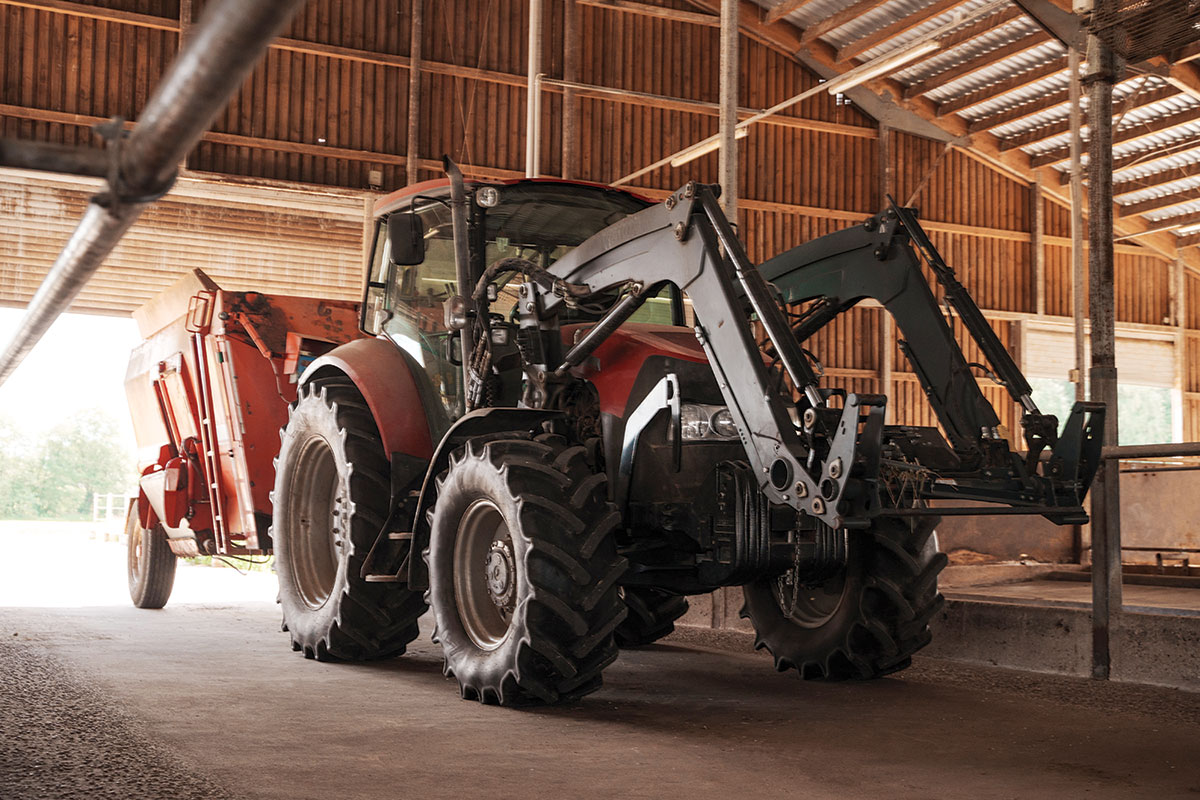
Safe storage techniques. Proper storage protects machinery from the environment. Weather changes can cause deterioration over time. If possible, store your equipment in a dry sheltered location to help prevent rust and other weather-related damage. Investing in quality covers and tarps will add extra protection for equipment that see minimal or no use in the winter months.
General reminders. Think of your tractor like a daily driver by “popping the hood” and checking on a regular basis. It is an easy way to keep costs down and fix issues before they become big. Check the volage and amperage of the battery and look for corrosion on the poles and cables. Inspect the tires, check the pressure and be sure you have plenty of tread to get out of mud, snow or other slippery conditions. Check the oil and other fluid levels. Look at air filters and replace when no longer cleanable. Check clamps, seals and fittings and tighten as needed.
With just a few steps, you have improved the odds of your farm equipment performing when you need it to. Having a regular maintenance schedule will keep your biggest investments in top shape and running on your farm.