


A first generation family dream farm
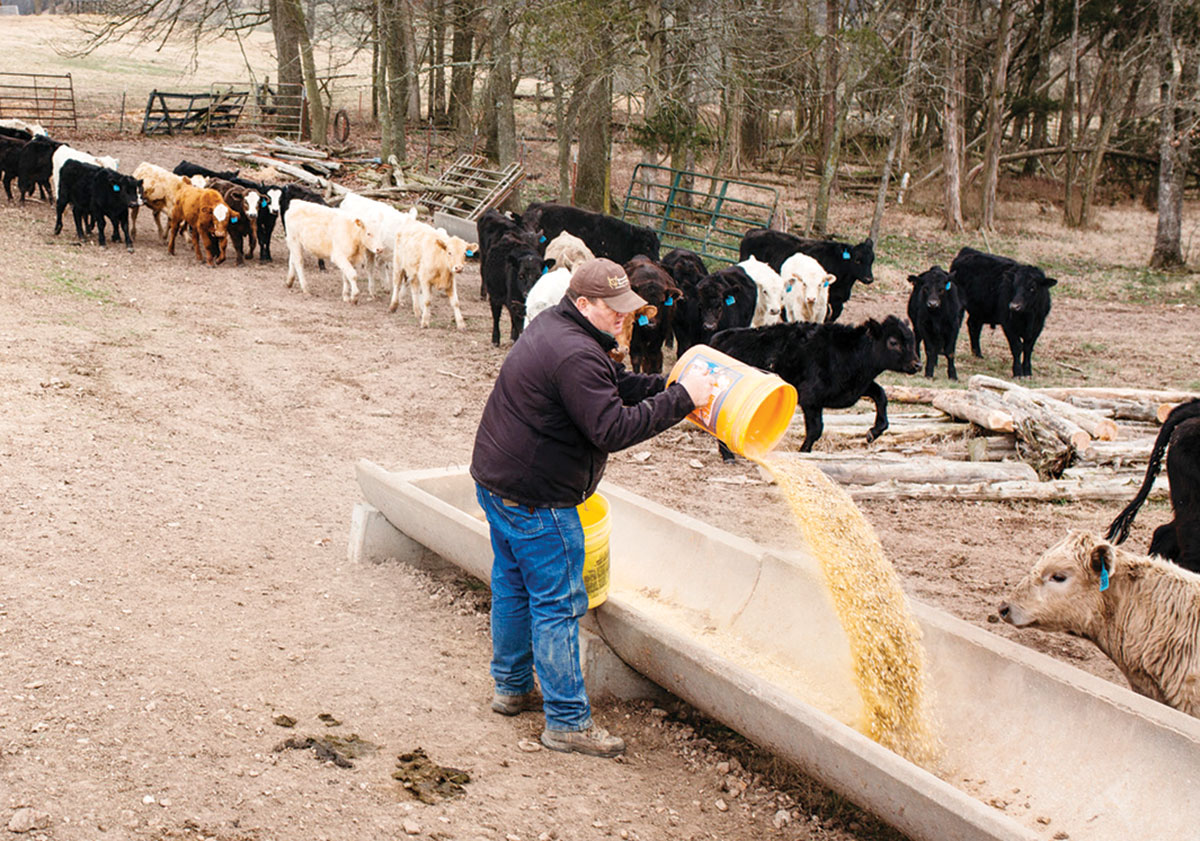
VINITA, OKLA. – Cory and Hailey Poole, along with their 10 children, live at and operate their farm in Vinita, Okla., Speckled Feather Farms. The first-generation farmers raise quail, cattle, sheep, goats, chickens, turkeys, fruit trees, and blackberry bushes. They also have a produce garden that feeds their families and provides for their farm’s CSA (Community Supported Agriculture) baskets.
Cory and Hailey Poole were living in Illinois when they started raising Coturnix quail in a self-contained system at the home where they were renting. The speckled feathers from their female quail are what inspired the name of their farm, Speckled Feather Farms, in Vinita, Okla. Their farm, established in 2020, is where they still raise quail, along with cows, sheep, goats, chickens, turkeys, fruit trees, and blackberry bushes. They also have a produce garden to grow their own family’s food, along with the farm’s CSA baskets.
“We’ve started focusing on what’s popular and what works in our soil,” she said.

“We’re both first-generation farmers who are passionate about what we’re doing, and we wanted to pursue this as a family.”
“We’re both nerdy people who, throughout our marriage, have talked about raising our own food and constantly researching. It was always the goal and the dream.”
Their foray into raising turkeys began in Illinois, when their oldest son found turkeys for sale for $5 each.
“He had this whole business plan in his head,” Hailey said, adding that she and Cory had ideas of their own but knew their quarter-acre lot was not big enough to fulfill those dreams.
“We’ve always had a desire to raise our own food,” Hailey said. “(When we were renting in Illinois), we realized we really needed to have land.”
The family, which now includes the couple and their 10 children, looked for land that was affordable and could support their dreams of growing their own food. They found it in Vinita, and they purchased the land.
“It was ‘if not now, when’,” the couple agreed. Hailey added that “we wanted to teach our kids how to grow their own food and that wasn’t going to happen in Illinois.”
Like many farmers, the Pooles have jobs that help support their farm income; Cory is a cook at Piguet’s Prime Time in Vinita, and Hailey is an ICU nurse in Tulsa.
The family’s home is on the 20 acres they found in the Vinita area, and they’ve been able to do everything they wanted to do on that land using some sustainable and regenerative agricultural practices, Cory said.
“We’ve been able to sustain a fairly impressive thing with the land that we have,” he said.
The farm is transitioning away from goats and focusing more on sheep, largely because they are easier to move. When they first started their farm, they went with the philosophy of “let’s try a little bit of everything and see what sticks,” Hailey said.
One way that the Pooles foster sustainability is they use various byproducts from the farm to support other components.

“We did a lot of research, Hailey said. “We use what byproducts we can that will benefit the rest of the farm.”
For example, the couple explained, they use the garden scraps to go into the quail feed, and the compost waste from the quail goes to fertilize the garden. They used chicken tractors, which helped keep the fly load down, Cory said, adding that “it’s a cyclical thing” and that “everyone’s waste should pay into the next system.”
Modifying and perfecting their systems has been the main way that the farm has changed since it opened, Hailey said. For example, their garden supports CSA baskets, and while at first, they tried to grow a little bit of everything, they’ve refined their process to focus on what is most popular in those baskets. The customers near Hailey’s job in Tulsa are a completely different customer base with different preferences, the couple agreed.
Whatever they choose to do now and in the future must be done to support the land and their animals.
“If the land is being torn up, we’re doing something wrong,” Cory said. “We’ve either got the wrong balance or too many animals.”
The couple also makes sure that the farm is self-sustaining and that they don’t incur any debt to maintain it. This is a life lesson they are passing down for the sake of their children.
“If we can survive, it gives our children a bigger platform,” Cory said.
Each year, the family evaluates the farm and how well it’s doing.
“We ask ourselves if it’s better than it was the year before,” Hailey said. “It’s been neat to see how we can do that on a year-to-year basis.”
The couple agreed that another reason their farm has been successful is their willingness to listen to their neighbors, many of whom have been farming for multiple generations.
“It’s not a mistake that they’ve been successful raising their farms for 50 plus years,” Cory said. “You can learn a lot from your neighbors if you’re willing to open your minds. We’ve taken everyone’s advice and filtered it through prayer. It’s helped us develop our philosophy and how we’re going to do this.”
As Speckled Feather Farms moves into the future, the Pooles plan to have more gardens, berries, and sheep. Quail will also continue to be a popular staple on the farm.
Cory has an extensive butchering background, which has allowed him to offer custom processing. He plans to start teaching quail processing in the near future. They also hope to open a farm stand on their highway frontage property, which will allow them to become a larger part of the nearby community.
“We’ve got multiple interests right now, but we’re also honing in on the specific things that people love,” Hailey said.