

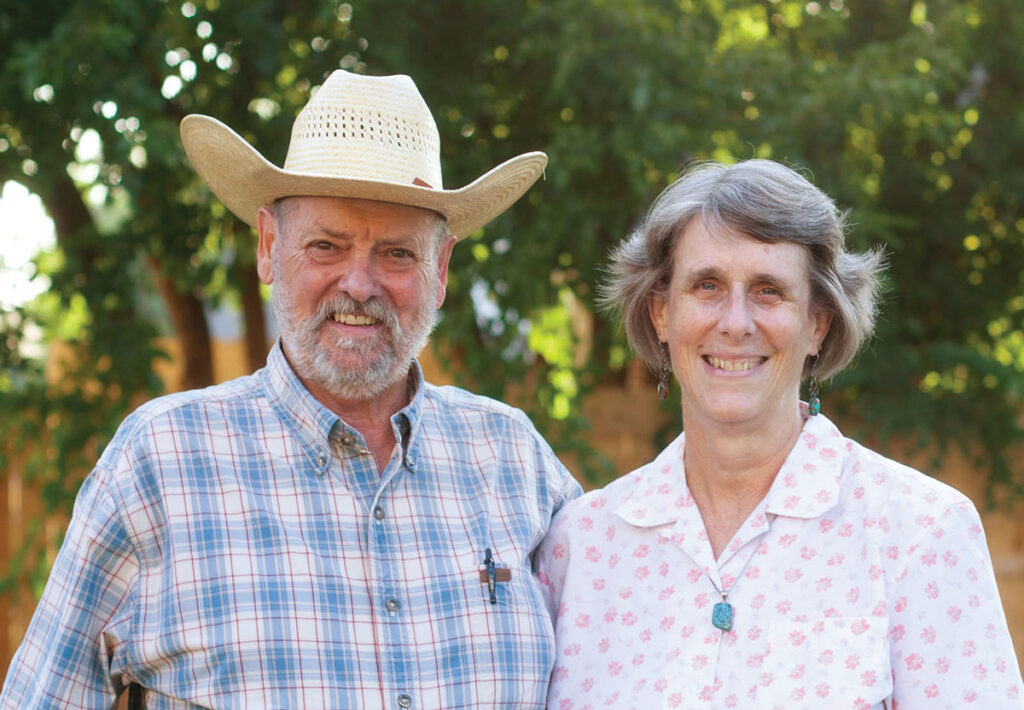
Owners: Richard McConnell and Tina Williams
Location: Aldridge, Mo. (Polk County)
History: Richard McConnell grew up on a dairy farm outside Republic, Mo., and spent several years working in construction. He also served three and a half years in the Peace Corps in Honduras. After receiving his B.S. and Masters degrees in Agriculture Education, he taught Vocational Agriculture for 13 years in Odessa, Mo. From 1997 to 2015, Richard worked for the Polk County Soil & Water Conservation District. In 1993, he bought a farm in Polk County where he raises beef cattle.
Tina Williams grew up in northern California on various ranches with her parents. As an adult, she lived and worked in California, Oregon and Alaska, moving to Missouri in 1982. She worked from home, designing webpages for several years, a skill that has come in handy as she and Richard developed their own company. She is the daughter of Bud and Eunice Williams, well-known stockmanship and livestock marketing educators who developed premier techniques based on current prices to assist in making profitable marketing decisions. During the 1990s, they shared that information through articles, books and videos. Richard and Tina met in 2002 and after attending numerous Bud Williams seminars, began teaching Proper Stockmanship and Livestock Marketing schools through their own Hand n Hand Livestock Solutions.
Services Offered: Together, the married couple provide seminars and on-line courses for ranchers and livestock owners who are looking for better ways to handle livestock and maximize profits. They continue teaching Bud Williams’ original techniques with Eunice close at hand for guidance.
Through Hand n Hand Livestock Solutions, Richard and Tina have taught in-person classes from New York to California, from Mexico to Saskatchewan. “We also do on-line classes, a package that includes four or five lessons, one per week,” Richard explained.
“Our clientele includes everyone from first timers to veterinarians, all of whom want to learn more about marketing and handling of livestock that will result in optimum production and profit,” Richard concluded.