

A Conversation with Curator Christopher Wiseman
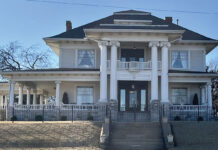
JOPLIN, MO. – Nestled in Schifferdecker Park, on the outskirts of Joplin, Missouri, is a wealth of historical artifacts housed in the Joplin History and Mineral Museum. Christopher Wiseman, Curator of the Museum, sat down to share the many layers this local museum shares with the community and visitors from all over the country.
The museum is separated into two parts. As you enter the front doors, to your left is the Mineral Wing, the oldest portion of the museum. This is a dual-level cave-like experience, showcasing the history of mining in the Joplin community, and how the natural minerals helped to shape the landscape and economic development of the city of Joplin to the burgeoning metropolis it is today.
One can browse the diverse number of showcased minerals from former mines in the district, many of which have been donated by individual miners and family members. While no gold was ever mined in this part of the country, Joplin was similar to a Wild West Gold Town in many ways. “Miners living in tents, saloons and other entertainments abounded to liberate money from hard-working miners,” Christopher Wiseman shared. This wild west history most likely accounts for the many outlaws, bank robberies, and crime that took place along the historic Route 66 highway that runs through the heart of town.
Ore was a mineral in full supply in the mining industry of Joplin. “We have some of the best specimens of tri-state ore on display in the world.” said Wiseman. Mining ceased in 1970. In 1998, the museum sent a camera down into Crystal Cave, hitting water at only 8 feet deep. Due to the depth of mines, all mines are now flooded and inaccessible for future motherloads of ore and other geological mining substances.
Wiseman originated from the Joplin area. He came on board with the museum in February of 1997. With a master’s degree in museum science from Texas Tech University, he and his family decided to move closer to their southwest Missouri roots. While Wiseman loves the historical aspect of mineral mining in Joplin, his favorite part of curating a museum is the firsthand curiosity he sees from younger visitors. “Kids love rocks; it is an elemental part of their development and one of the last bits of natural treasure they stumble upon in the innocence of youth.” says Wiseman.
One notable display is a special feature on the second floor of the mineral wing. This exhibit houses several rocks against a black tapestry and underneath a black light. Guests can stand behind a curtain, flip the light switch and enjoy a glowing performance of minerals. The vibrant glow from this special selection of rocks provides an awe-inspiring visual treat for all.
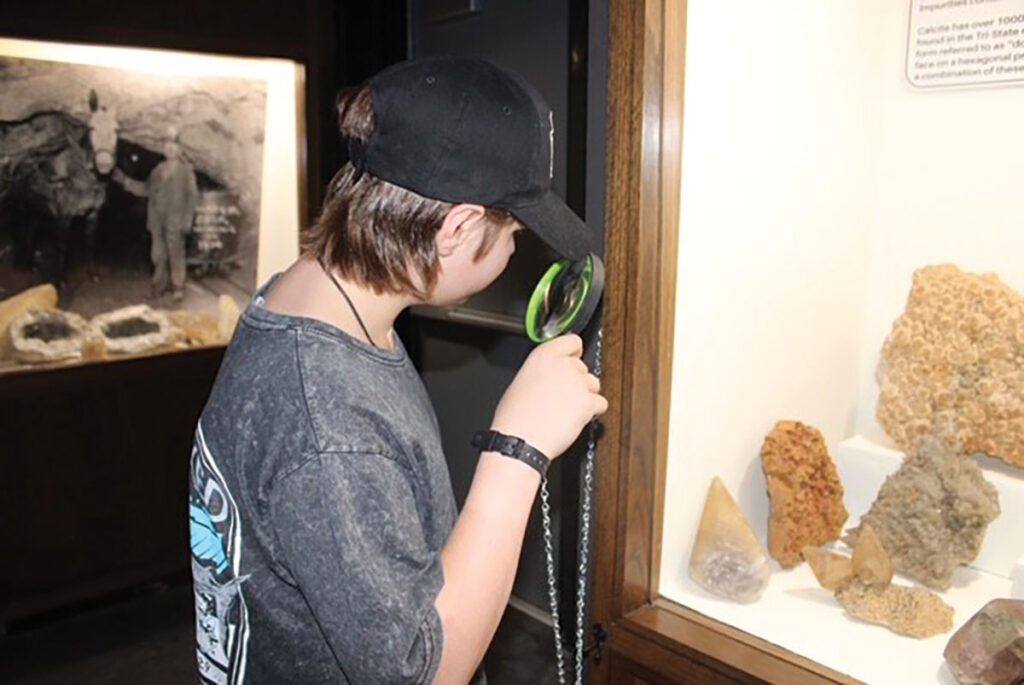
Wiseman personally owned a sizeable collection of minerals and geological anomalies from the Joplin area. Unfortunately, his collection was assaulted by the 2011 tornado that ravaged a whole section of Joplin. He still searches for rare rocks but offers any substantial findings to the museum for educational purposes in which the community can enjoy.
The newest portion of the Joplin History and Mineral Museum was added in 1978 and houses the original Dorothea B. Hoover Historical Collection. This portion showcases the history of Joplin and surrounding areas, including a handful of noteworthy displays: Historic Route 66, a wealth of Bonnie and Clyde information, House of Lords Exhibit, Joplin Fire Department, Junge Baking Company, Famous Joplinites (including Dennis Weaver and Langston Hughes), the infamous Soda Shop, and even a section on the historic EF-5 2011 Joplin Tornado. Photo archives are proudly displayed from the Joplin Historical Society.
An absolute must-see is the large section dedicated to the Joplin history of Bonnie and Clyde, the infamous outlaw duo that ravaged small towns along Route 66 during the Great Depression. The Joplin hideout apartment, where Clyde Barrow, Bonnie Parker, Buck and Blanch Barrow, and W.D. Jones stayed for 13 days, relegated several historic artifacts from the couple’s two-year crime spree. You can see stolen jewelry from a heist in Neosho, Missouri left behind in the historic garage apartment. There is an arsenal of photos from rolls of film left behind from their daring escape when the police showed up, suspecting the small gang of bootlegging. A life-sized print of Bonnie and Clyde, standing next to the original door of the garage apartment hideout, was donated to the museum for posterity. The museum offers a wealth of information related to the duo’s crime spree and stops along historic Route 66, specifically in Joplin and surrounding towns in the early 1930s.

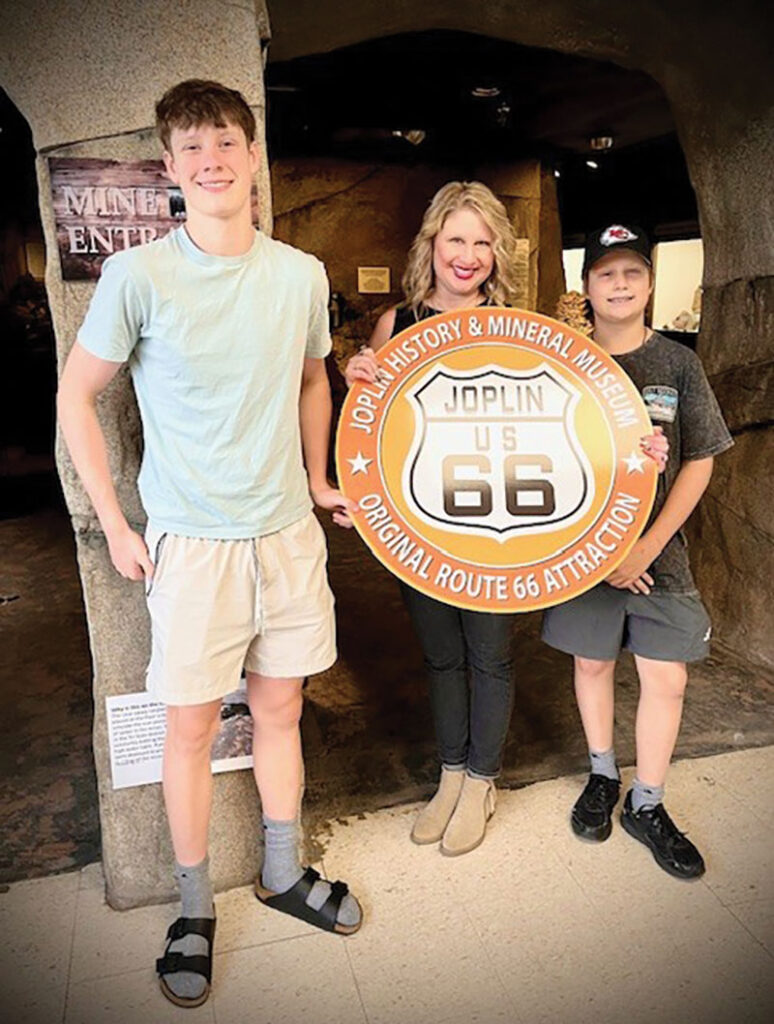
Wiseman directed my sons and I to a special traveling exhibition on black history of the Ozarks, entitled ‘Joplin Uplift’. This room is full of historic photos, pinpointing notable dates, historic documents, artifacts, and a wealth of intriguing black history from Joplin and surrounding areas.
Dedicated to a room all its own is a 1927 firetruck. According to Wiseman, Joplin had one of the first motorized fire departments in the country, complete with a Buick frame chemical extinguisher, lovingly referred to as ‘The Goat’. “In those days, the Joplin Fire Department had fires under control by the time the local fireman on horseback arrived.” shared Wiseman. “It was the way of the future for fighting fires”. Wiseman proudly spoke of Joplin being the first city west of the Mississippi to possess a motorized firetruck.
The Joplin History and Mineral Museum is a small gem located in the heart of Joplin, a hop, skip, and jump from the historic Route 66 Mother Road, which will celebrate her Centennial Birthday in 2026. Whether you are familiar with the Joplin area or just passing through, there is something of interest for every special guest. Find out about hours, location, and collections here: https://www.joplin-museum.org/.