
Sign-Up Begins Today for USDA Disaster Assistance Programs Restored by Farm...

The Preaching Farmer
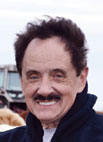
He has been known as the Racin’ Reverend and the pastor with the unforgettable name but in recent years, Reverend Jack Daniel has ‘come home’ to El Dorado Springs, Mo., to his roots as a farmer and to once again pastor the local First Christian Church (Disciples of Christ) after a near 30-year leave of absence. Even so, so-called retirement for Jack Daniel does not include slowing down.
Growing Great Genetics

For the last decade, Robert Brooks has watched his dreams come to fruition on the same soil where his great-grandparents built their dreams years ago. As he glances at a hill near his home, Robert’s smile widens and he said, “I have pictures of my dad when he was 9 years old standing on that hill with his Shetland pony.” That “hill” is part of a 400-acre farm between Rogersville and Fordland, Mo. Robert and his family pieced together the farm as generations of the family passed down the property. “My grandparents bought all this and they worked it. There is a lot of blood, sweat and tears in these acres. And I just want to carry on that heritage and have something that I can pass down to my kids too,” reflected Robert.
Tested and Approved
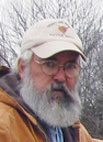
Steve Stewart runs cattle on his dad’s farm in Christian County near Spokane, Mo. His dad had cattle as long as Steve could remember. Steve said, “I think I bought my first ones in 2002. The first ones I bought were Gelbvieh and then I started looking at the Balancers and the hybrid vigor. So I bought an Angus bull and put it with the Gelbviehs.”
Maintaining Healthy Pastures
Producers who have a warm- and cool-season forage base should pay attention to the transition between spring and summer seasons. “Excessive cool-season grasses in late spring can delay the emergence of warm-season grasses,” said Jeremy Huff, state grazing lands specialist for Arkansas’ U.S. Department of Agriculture’s Natural Resources Conservation Service. “Consider grazing cool-season grasses more closely in late spring to open up the plant canopy and help promote the release of warm-season forages. Also, maintaining rotational grazing activities will allow more available forage in possible drought susceptible periods.”
The Art of Stocking Pastures
A number of factors go into determining what the stocking rate should be on a given cattle operation. According to Dr. Tom Troxel, associate head-animal science for the University of Arkansas System Division of Agriculture, the number one factor is what kind of livestock you’re going to graze – stockers versus cows, or what types of cows. “Also, how productive those cattle are,” Troxel told Ozarks Farm & Neighbor. “If they’re 1,100-pound cows with average milking ability, you can graze more of those on any given piece of land than you can graze 1,400-pound cows with superior milking ability, because those two cows require different amounts of dry matter intake.”