
Most farmers probably don’t think of themselves as having a “brand.” The word sounds like something that belongs to a company with a marketing department, a logo and a social media strategy.
But I work in marketing, and I have come to believe a brand is much simpler than that. A brand is what people think of when they hear your name.
For a farm or agribusiness, that reputation is built over years through hundreds of small interactions. How you treat a customer. How you communicate. The quality of what you sell. How you handle a problem. Whether you return the phone call. Whether you do what you said you would do.
In agriculture, your reputation can get there long before you do.
In other words, by the time someone calls about buying a bull, they likely already have an opinion about the people who raised it.
I learned some of this growing up around our family’s Hereford operation. My dad sold purebred bulls to commercial cattlemen, and like anyone who has been around livestock long enough knows, animals are animals. Sometimes things happen.
My dad guaranteed the bulls he sold. If a bull went lame, for example, he would loan another bull to help cover the cows in a timely manner.
He could have treated the sale as finished business. Instead, he saw the relationship with the customer as more important than the transaction.
That decision became part of the reputation of our farm.
Looking back, I realize those things communicated something about our operation without anyone ever putting it into a marketing plan.
My dad was also a teacher by nature. He knew that understanding EPDs could be difficult for commercial cattlemen, particularly because the numbers and expectations differ among breeds. But he also knew those numbers mattered when someone was making a breeding decision.
So, he took the time to go through the EPDs with customers and explain what the numbers meant. He even provided a graph to give them a visual reference. Those graphs are still printed in our sale catalogs today.
That was marketing, although we never called it that.
It was simply being useful. It was knowing your product well enough to explain it and caring enough about the customer to take the time.
And reputation becomes even more important when things don’t go perfectly.
Anyone can look good when the cattle are healthy, the check clears and the hauler shows up on time. The real test comes when there is a disagreement, a delayed delivery, an animal that doesn’t perform as expected or a mistake that needs to be addressed.
How you handle those moments becomes part of your farm’s story, too.
The same is true for how you present your operation. That does not mean every farm needs a professionally produced video or a perfectly manicured Facebook page.
There is a difference between presenting something honestly and trying to make it look perfect. The goal isn’t to create an image that doesn’t exist. Ideally, what people see online matches what they experience when they pull into your driveway.
And then there is the next generation.
When I think about our family’s farm, I don’t think people thought only about my dad. They thought about the entire family. My dad raised us alongside the operation. There was never a list of jobs I couldn’t do because I was a girl or because I wasn’t big enough.
We just wrapped up one of our production sales, so sales are on my mind. During sales, we worked the ring, prepared cattle, fed, helped with load-out and did whatever needed to be done. My dad taught us, we learned, and then he counted on us to do it right.
You are already marketing your operation every time you interact with someone.
That is one of the things I have learned from working in marketing. Every organization has a story. Even a bank, which at first glance might not seem like the most exciting thing in the world, has a story built around its employees, customers and communities.
Farms have some of the best stories there are. The difference is that farmers don’t always think about telling them.
But the best marketing usually isn’t something you create. It is something you have already earned. It is the story people tell about you when you aren’t there to tell it yourself.
It can influence who calls you when they are ready to buy. Who recommends you to a neighbor. Who trusts you when something goes wrong. Who wants to do business with you again. Who is willing to give the next generation a chance.
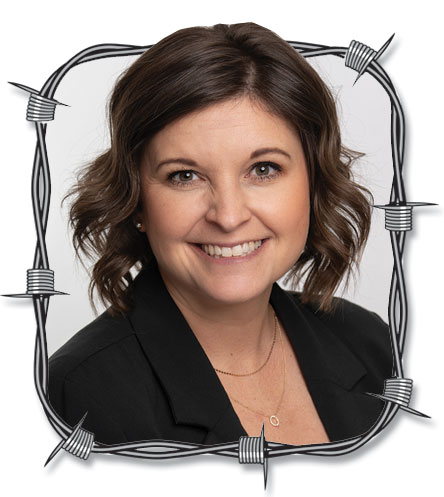
Jamie Johansen is the marketing officer at Heritage Bank of the Ozarks.