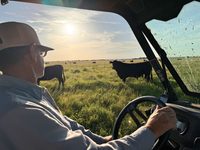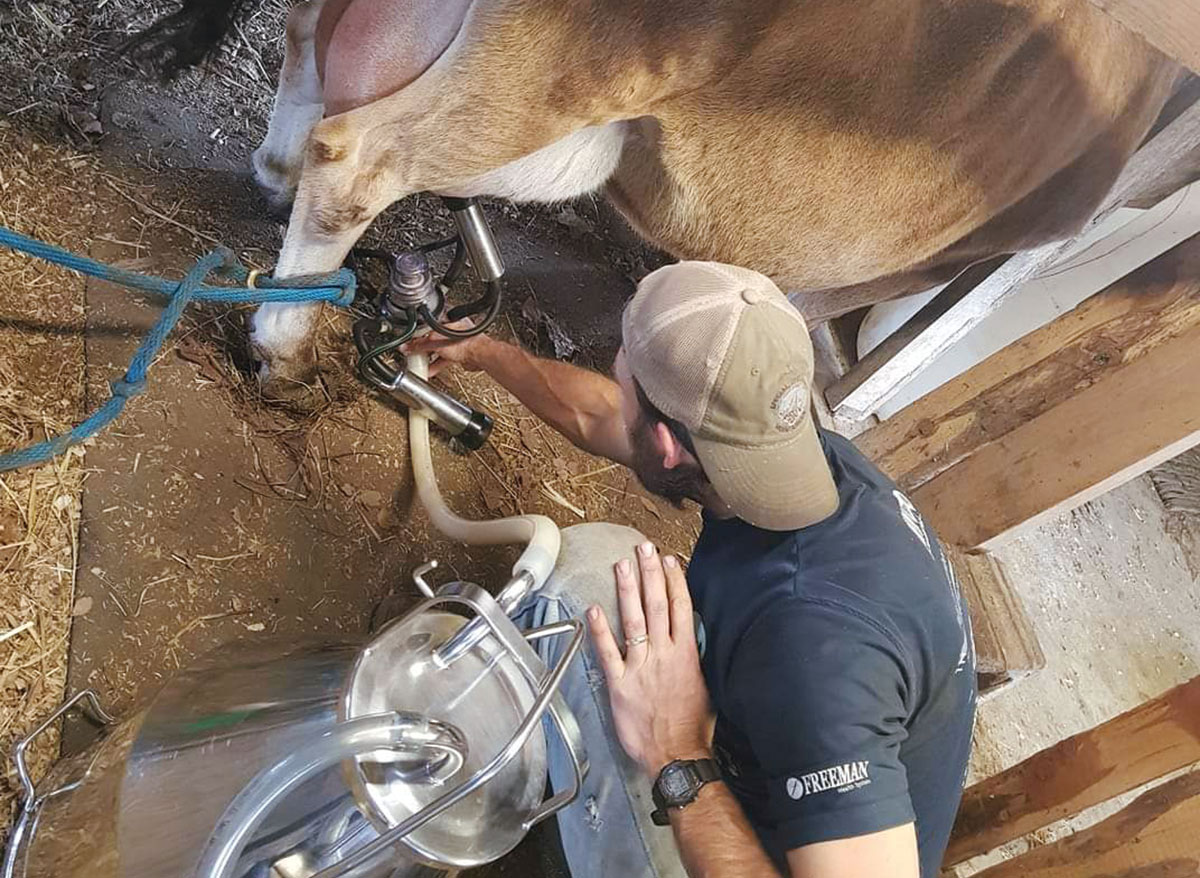



In the Reichert community, in LeFlore County, Okla., is a ranch in transition with an eye to a Charolais breeding operation as a second career after retirement.
Tommy Lowe has worked at the Jim Hamilton Correctional Center for 18 years and is looking to retire in two or three more. His wife Jill, on the other hand, is an administrative coordinator for the Oklahoma Department of Education and monitors the food programs of 43 schools and 23 day care centers. The couple met through social media and went Rhino riding with several other couples as a first date. They have four children and moved to where Jill’s family was located so their children could be around their grandparents. The youngest, Haylie Burns, is still in college in Poteau, Okla.
The Lowes own and lease 270 acres, on which they run 70 commercial momma cows and Black Angus bulls, in addition to a foundation herd of 10 registered Charolais heifers and a registered Charolais bull.
“No one in my family raised and sold cattle, though my father Luther did raise production pigs and most of what we ate,” Tommy said. “We had an extensive personal garden that I swear would grow rocks. I did clean them out but by next spring had a whole new crop. Nothing has changed because I fight rocks here too.”
Unlike his father, Tommy loved cattle and began raising them at 20, eventually purchasing land and cattle and paying for both through calf sales before moving to Reichert.
Last year was pivotal in the Lowe commercial cattle operation. Some mommas were aging and prices were good so Tommy sold 20 pairs and 70 calves and investing in his starter Charolais herd.
“Things never happen when you want them to,” Tommy said.
He had gone with some friends to look at Charolais bulls with no intention of buying one. He saw one he really liked and found out it was sold. A few weeks later, but months before he was ready to purchase one, the owner called and told Tommy that the bull was available. Tommy bought it anyway and is happy he did.
Tommy prefers spring calves and sells them at 7 months of age at the LeFlore County Livestock Auction in Wister, Okla., after working them, which including administering all vacinations.
“I prefer long range wormers because I have found them to be highly effective in addition to saving labor and being more economical in the long run,” Tommy said.
He grazes his cattle as much as possible, though he hays a bit and buys alfalfa hay in Spiro, Okla., to use in winter when needed. He uses free-choice minerals with the summer mixture being heavily laden with fly control. He also uses 17 percent protein bulk feed in creep feeders for calves and to help his bulls recover from breeding season as needed.
“If you don’t keep your bulls in good shape, you’re just spinning your wheels,” Tommy said.
Tommy’s Charolais heifers also are receiving bulk feed to strengthen and prepare them for breeding in May.
He does not let them see a bull until they are 14 to 15 months old in order to minimize heifer calving issues.
“The best pieces of advice I ever received were to check every animal at least once a day to catch problems such as a difficult calving for a heifer early on and to pick up hay string and wrapping so the pastures are clean and safe,” he said.
Tommy soil tests every two years, fertilizing with chicken litter. He controls weeds by broadcast spraying both spring and fall with briars a continual issue. His pastures are mostly Bermuda and mixed clover with clover reseeding scheduled to take place next fall.
Tommy uses ponds as his water source and added two more with the help of the Conservation Service.
“I added cross fencing and needed more ponds. All the paperwork makes you scratch your head, but it was worth it,” he said.
Tommy has a side venture: raising bees. He has had up to 60 hives but simply doesn’t have the time to care for them. He now has only 12, which he raises on shares with a neighbor who cares for them, probably until Tommy retires.
A queen lays 1,500 to 2,000 eggs per day to keep up with the hive population since a worker bee lives only for 28 days. A new hive can be started from an existing one by removing three or four frames and placing those in a new hive box. Tommy develops new queens by introducing royal jelly into regular eggs. This makes economic sense because a new queen can cost up to $50. With good weather, one hive can produce 15 gallons of honey, a bountiful harvest for a high demand local product.
One of the first things Tom plans on doing when he retires is to take a refresher course on AI and to learn how to palpate.
“AI is like riding a bicycle, you don’t ever forget it but you can get rusty so a friend will help me until I retire,” Tommy said, adding that he wants to use AI in order to quickly and cost effectively improve the genetics in his herds while learning to palpate will save veterinary costs.