
This toxic weed is one of the first to bolt in the spring
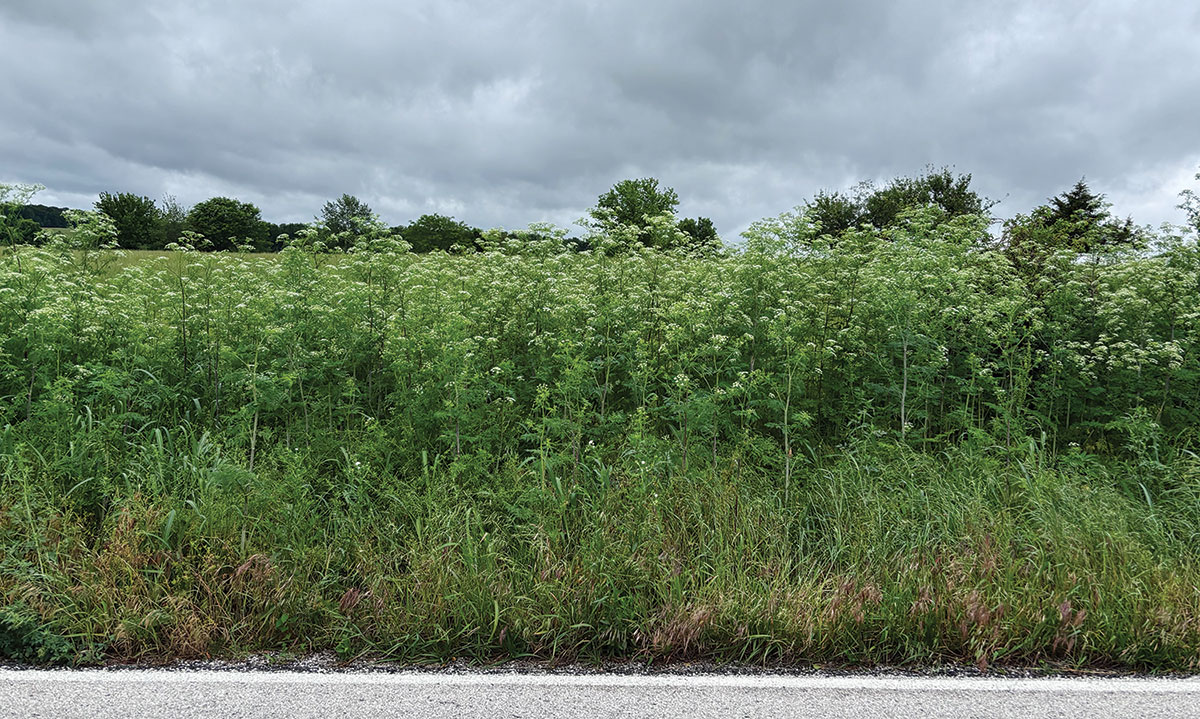
When you see a batch of white flowers growing along the road ditch it is easy to think about how pretty they are lining the side of the road. Unfortunately, those dainty white flowers are probably poison hemlock. This is the time of year when lots of different plants are growing and flowering and even though not every batch of white flowers are bad, there is one you should avoid.
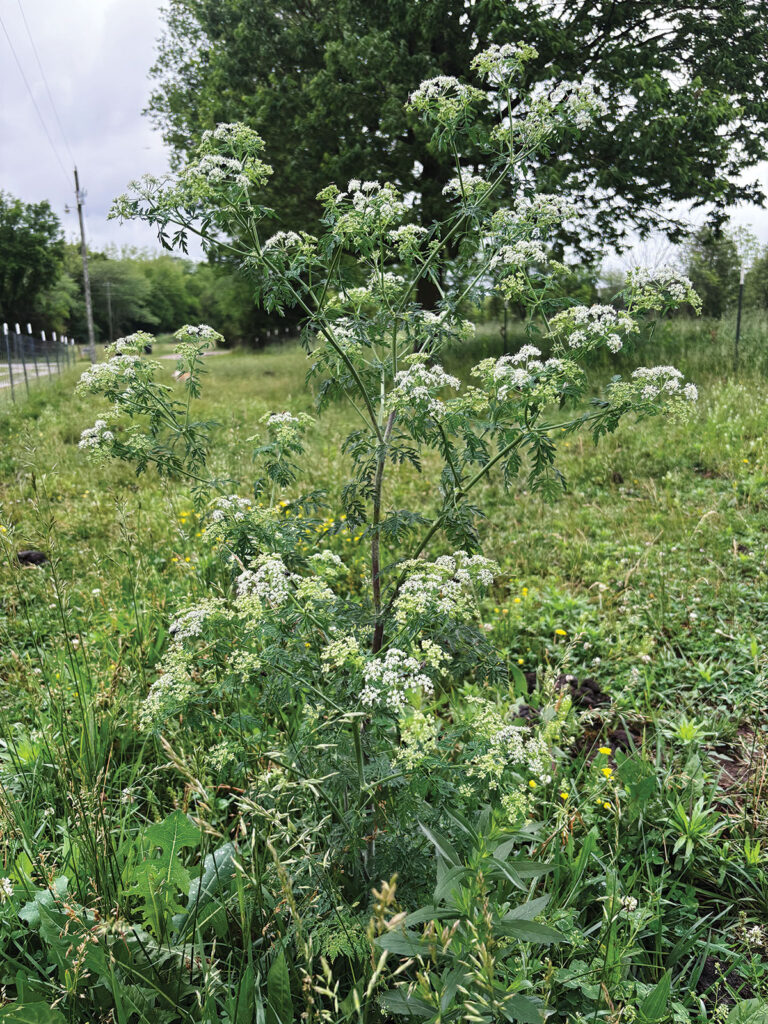
Poison Hemlock, when small and in the growing stage, it looks like Queen Anne’s lace, another weed that bears white, lacy flowers and fern-like leaves. Both have hollow stems, but poison hemlock’s stem is hairless with purple blotches. Queen Anne’s Lace, or wild carrot, rarely grows more than 2 feet and poses no danger to humans or livestock. Hemlock is one of the first weeds to green up in the spring and will grow up to 6 feet high.
You should most definitely stay away from this stuff and it can be very unpleasant if you touch it. Hemlock is poisonous and can impact you worse than poison ivy. It is also a plant that can kill livestock and cause birth defects in the offspring in pregnant livestock. Early control is important because mature plants with flowers do not respond as well to chemical control.
Control poison hemlock with pasture herbicides early while it is in the rosette stage and before the plant forms flowers is the best time. Consult with your state extension office on the best chemicals to treat hemlock. Nonchemical control options include hand weeding, mowing and tillage.
If you are dealing with poison hemlock, wear protective gear including gloves, long sleeves, pants and eye protection. Sap from the hemlock touching the skin can cause blisters and welts. Do not burn hemlock as the smoke can be dangerous. If you are mowing hemlock, be sure to wear protective gear to avoid breathing in the pollen of the plant if you cut with a brush hog, weed eater or open cab tractor.
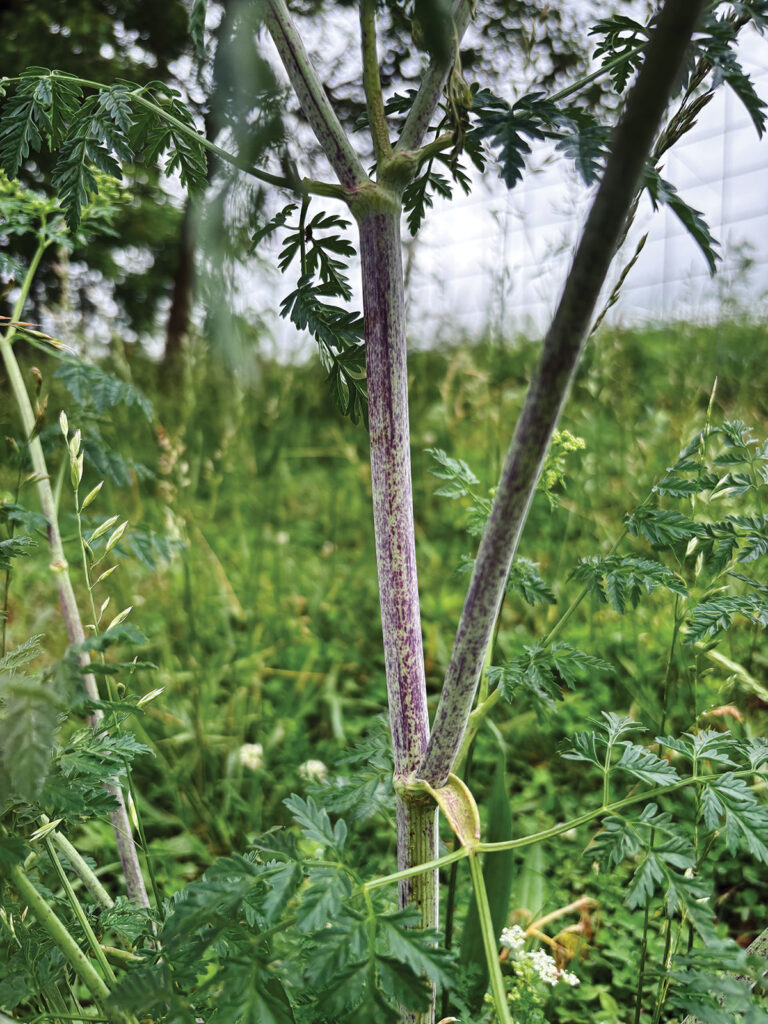
Every part of this biennial contains gamma-coniceine, coniine and other toxic compounds that are harmful even in very small amounts. These toxins affect cattle most, particularly with respect to birth defects, but they also affect sheep, goats, swine, horses and other domestic animals.
These toxins affect the nervous system like nicotine, initially causing tremors that may progress to total paralysis and suffocation. Symptoms usually appear within an hour of ingestion, and the animal can die in a few hours.
It is crucial to avoid bailing hay that contains poison hemlock, especially if the plant has not been completely removed. The risk of toxicity persists in hay, even after it has been dried and stored. It is advised not to feed hay from fields where hemlock has been present.
We cannot afford to take the risk of poison hemlock in livestock production. The toxins remain in the plant even after it is dried and cut. And unfortunately, there is no reliable way to determine how much of the plant needs to be consumed to cause harm.
If you are concerned about poison hemlock in your pastures and hayfield, it is recommended to take immediate action by spraying especially in a pasture you plan to cut for hay. Avoid overgrazing pastures to decrease the risk of livestock ingesting the plant. Producers should always prioritize safety by removing poison hemlock from pastures and hayfields and never risk feeding hay that may contain it.