
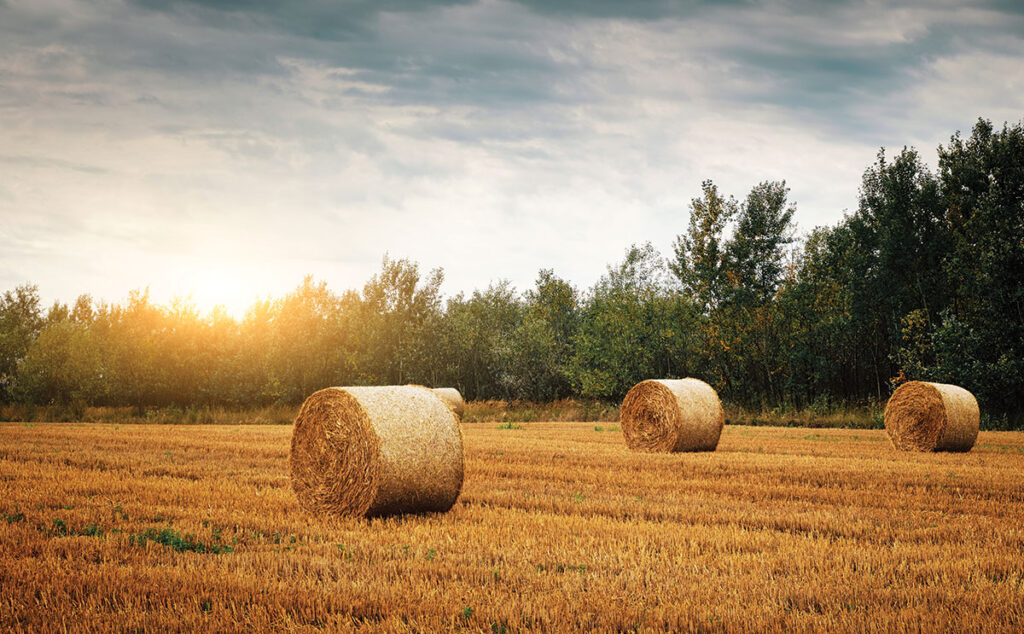
Making the most of every bale
With hay season upon us, putting up and storing quality hay is important to ensure your livestock will be getting the most of the forages when it comes time to feed those bales.
Quality of hay can be affected by many factors. Cutting time, cutting height and fertilizer application and management are factors that can be controlled. Uncontrollable factors include things such as hot and cold periods, humidity, freezing or frost and of course rain.
Once hay begins to mature and is in the heading stages, forage quality starts to decline. The plant is slowly transitioning its resources from growing leaves and stems to the head and the seeds. Depending on the weather in your area, it is important to closely monitor the plant growth and make decisions based on the maturity of the forage and not necessarily on height to maintain the quality of the forage.
When swathing or cutting time comes it is important to monitor when the best time is to harvest. Kansas State University Extension agronomist Tina Sullivan reminds producers that “plants are moving sugars at different times in the day,” so emphasis on harvest times is suggested. On high humid days, cutting time is best mid to late morning, only after the dew has dried. This helps with quicker drying products and contains nutrients at peak time.
Optimal raking conditions is the next priority and when the day is hot, dry and windy, drying rates increase. The dryer the forage product becomes, the greater the risk of breaking off leaf material. Proteins in forages, especially legumes, come from the leaves. If those are broken off, you are left with forage that has a high concentrate of indigestible nutrients. “We are losing forage quality and increasing indigestible fiber,” Sullivan explains. Ensuring the swathing, raking and baling timeline is optimal for the conditions is vital to the quality of the hay produced.
Once the hay is baled, whether it is wrapped in plastic, net wrapped, twine, stored indoors or outdoors, environmental factors such as water and temperature will affect the longevity of the quality of hay. A 15% to 18% moisture is ideal before baling to ensure the best storage and to avoid mold and heat concerns. Wet or damp hay will increase microbial growth that in a worst-case scenario, cause spontaneous combustion. In an area where wetter hay is a concern, wet wrapping is another storage alternative which acts as a fermenting environment instead of a heating one.
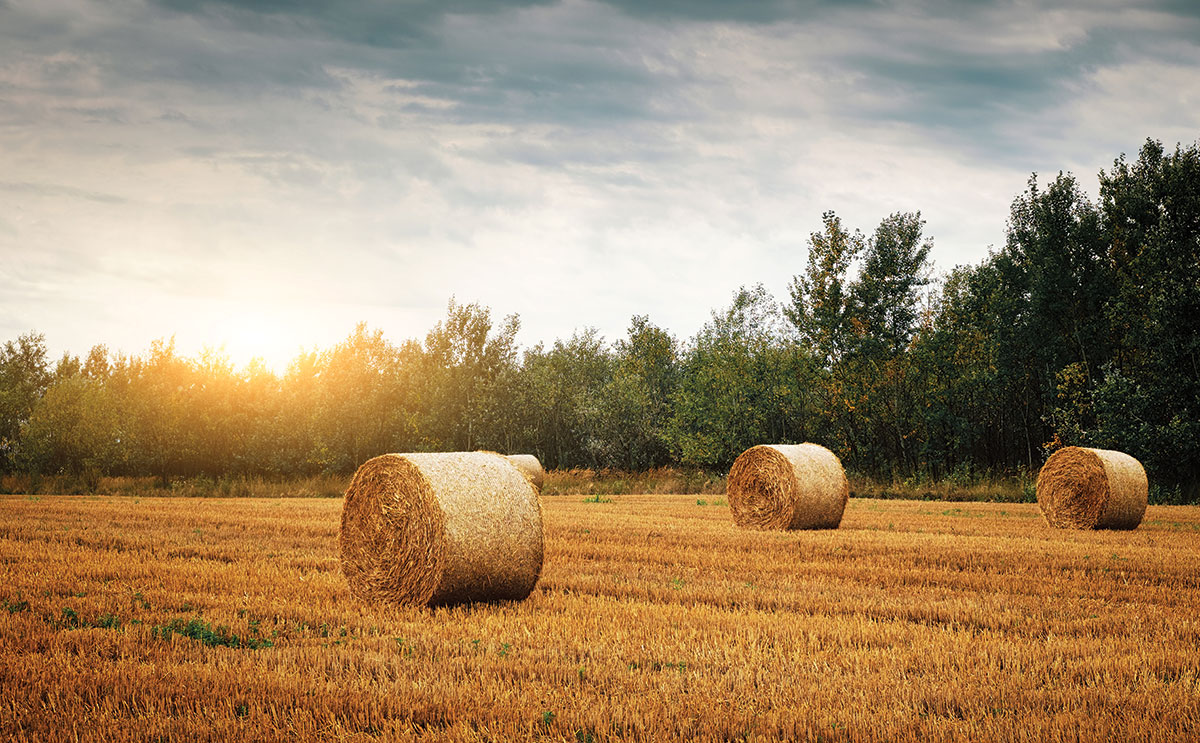
Research has shown that storage losses in large round bales stored outside and unprotected can be greater than producers realize. Dry matter losses can reach up to 50 percent depending on bale quality, storage conditions and length in storage. Severe deterioration in outside storage is usually confined to the outside two to eight inches of the bale. But the amount of rainfall along with temperature and humidity during the peak storage period can affect the depth and thickness of bale weathering.
An important key to reduce weathering is the tightness of the outer layer of the bale. The tighter the outer layer, the lower the losses regardless of whether the bale was formed using a variable or fixed-chamber baler. Research also shows that net-wrapped bales have storage losses similar to the standard plastic or twine wrap when the outer layers are the same density. If using sisal or plastic twine, the wraps should be no greater than eight inches and preferable six inches apart on the bale. This does take extra time and expense during the baling process, but this is justified if the bales are to be stored outside.
The storage site to reduce bale losses should not be shaded and should be open to breezes to enhance drying conditions. Choosing a well-drained area will minimize moisture absorption into the underside of the bales. Up to 12 inches of the bottom of a bale can be lost through moisture absorption. If practical, keeping bales up off the ground by using surplus materials such as old pallets, racks, fence posts, railroad ties and used tires. A layer of crushed rock or large well-draining rock will help with drainage around the storage site.
Hay should be stored in rows, butted up end-to-end and in a north/south direction with at least three feet between rows. This will provide sunlight penetration and air flow which will allow faster drying after a rain. If bales can be covered with plastic or canvas, they will have less deterioration comparted to uncovered bales. Stacking bales three high in a pyramid style and covering with a tarp, can also protect more bales in a smaller area.
Round bales benefit from protection while in storage, however there are many factors to consider when justifying the cost to provide this protection. Hay value, projected in-storage losses, local environmental conditions and where the hay will be used are important considerations when deciding what is right for your operation.
Hay season is just getting started in many areas, so being prepared and aware of the many factors that contribute to a quality hay product will hopefully make for a successful winter feeding season for your livestock.