
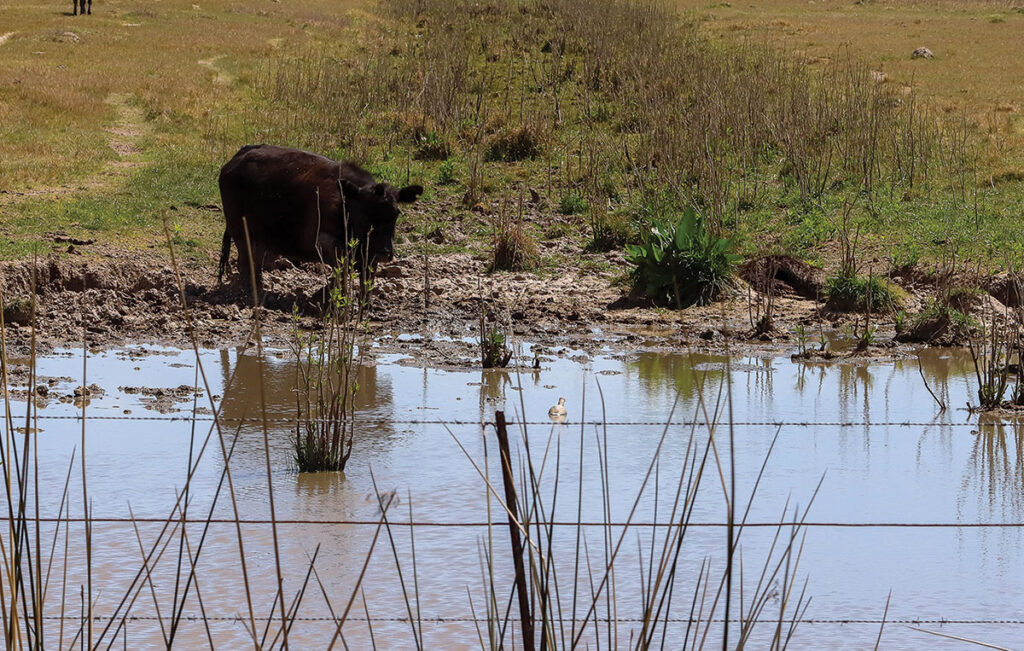
Is your water a bio-hazard to you and your livestock?
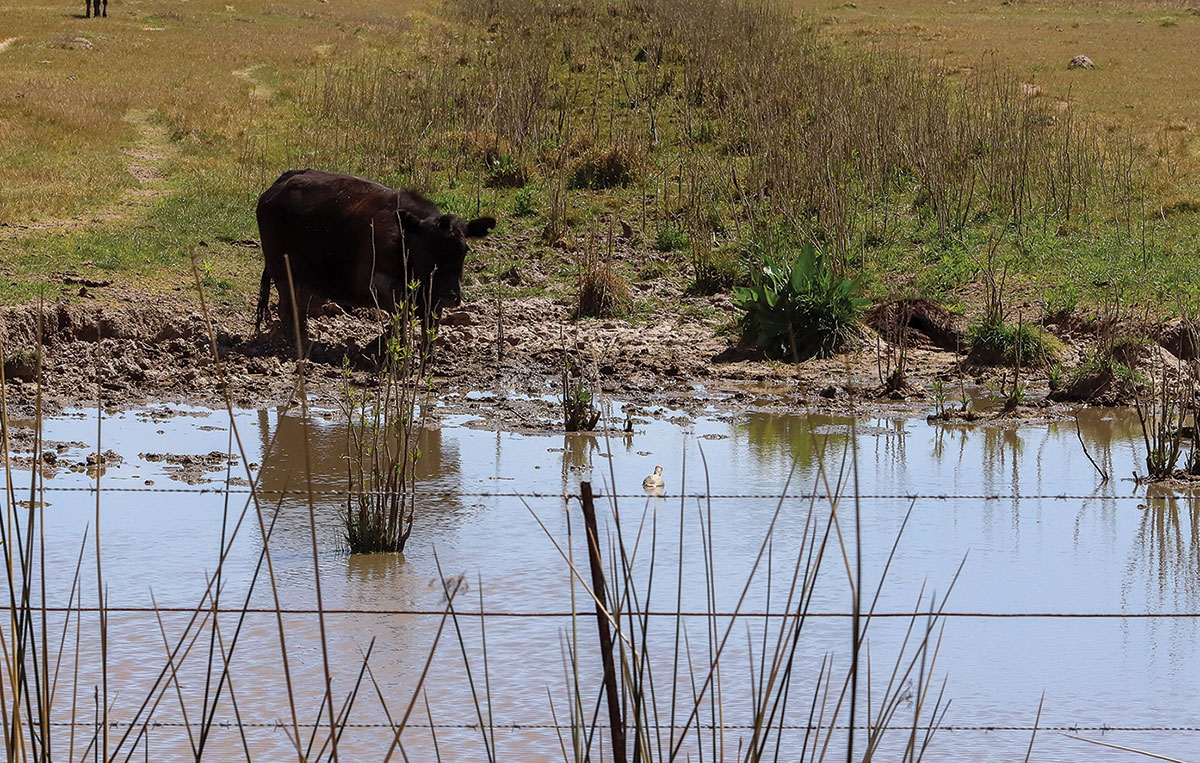
The hot, dry weather of later summer can cause water quality issues for grazing livestock. For some producers, the only water source is a pond or a dugout which can have hidden dangers for livestock.
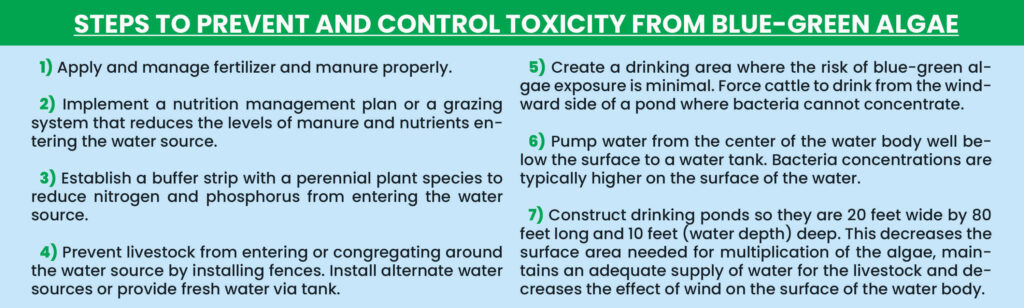
Blue-green algae also known as cyanobacteria blooms, are caused by excess levels of nitrogen and phosphorus. These nutrients are commonly introduced from runoff or soil erosion from fertilizer and manure.
The combinations of these excess nutrients with hot, sunny days, can result in toxic algal blooms. These blooms commonly occur in later summer and early fall but can also occur earlier depending on the weather. When conditions are right, the bacteria can multiply rapidly with populations doubling in a day or less and persist for several weeks.
The formation of toxic blooms is not always predictable even with rapid bacteria growth. Many environmental factors such as rain, heavy winds or cooler temperatures may slow the growth or break up the bloom.
Blue-green algae blooms commonly occur on stagnant ponds where there is the potential of high manure levels due to congregating livestock. As the bacteria forms, it can appear as scum on or just below the surface of the water. Actively growing cyanobacteria colonies can look bluish, green, dark green or brownish green in color but can also be red or yellow. The red or yellow colonies will turn a blue color after the colony has died and dried along the shoreline. You can locate algae growth on the downward side of the body of water as the winds will concentrate the bacteria, making it easier to identify.
There are several species of cyanobacteria and not all of them are harmful to livestock and other animals. The few that are toxic will produce a cyanotoxin and these cyanotoxins are harmful to nearly all livestock, wildlife, pets and people. These toxins affect primarily the nervous system and the liver.
Signs of cyanotoxin poisoning usually appear within 20 minutes of ingestion. Neurological symptoms include: weakness, staggering, difficulty breathing, paddling, convulsion and death can occur 2-24 hours following ingestion. Liver damage symptoms include: weakness, pale-colored mucous membranes, mental derangement, bloody diarrhea and death.
Livestock that survive cyanotoxin poisoning normally lose weight but in some case can develop photosensitivity. Symptoms of photosensitivity include sunburns affecting the lighter colored areas of the body including the muzzle, udder, vulva/anus and areas with white hide. Like a typical sunburn, the area will dry out, turn dark in color and peel to expose new skin.
There are no antidotes for cyanotoxin poisoning, but activated charcoal may be administered to decrease toxin absorption and atropine may serve to block acetylcholine receptors for the neurotoxin if suspected. Because of this, it is important to actively monitor ponds for algal blooms and keep livestock from drinking when the bacterial populations become high.
There are several ways to determine if you have a problem with your water source. One way is to walk on the downwind side and look for concentration of blue-green algae. Another sign of toxic water is the presence of dead mice, birds, snakes, or fish. Necropsy any dead livestock by a veterinarian to rule out other causes of death. If cyanotoxin poisoning is suspected, your veterinarian can collect appropriate samples for testing. You can also collect water samples to send in for testing.
Reach out to your local extension office or your county Natural Resource Conservation Service (NRCS) for expert advice on water quality, testing and steps to keep your livestock’s water sources healthy.